
Professional Strata Mould Remediation for Multi-Unit Buildings
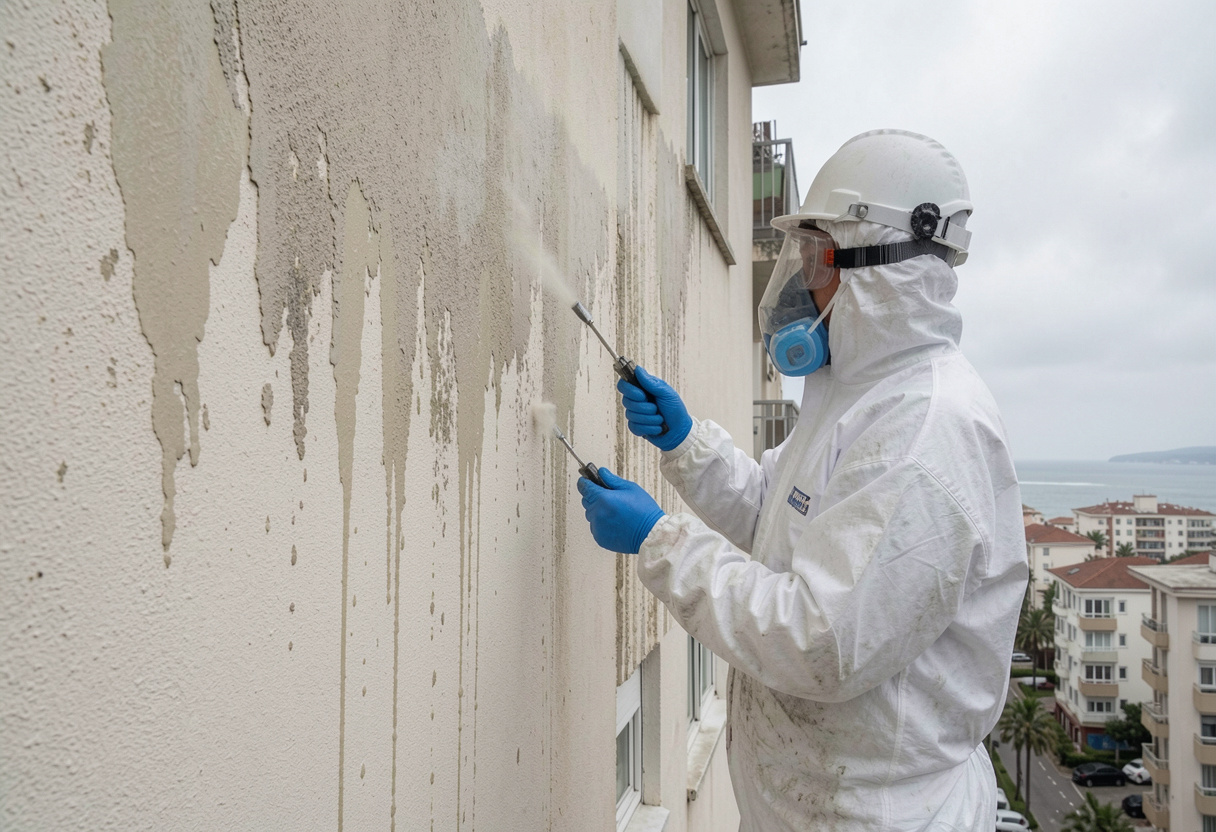
Mould in a strata building isn’t the same problem as mould in a house. When you’re a strata manager fielding a complaint from Lot 14 about black mould on an internal wall, the first question isn’t how to treat it — it’s whose wall it actually is. That question carries real legal and financial weight, and getting it wrong can cost the owners corporation significantly.
Newcastle’s growing strata sector — from the apartment towers along Honeysuckle to the mixed-use developments spreading through the CBD and Hamilton — is dealing with mould events that involve layered ownership boundaries, shared building systems, body corporate budgets, and formal governance processes. A generalist cleaner with a spray bottle isn’t equipped to navigate any of that. We are. We work directly with strata managers, body corporate committees, and managing agents across Newcastle to assess, treat, and document mould in multi-unit buildings the right way.

Common Property or Lot Owner — Getting the Boundary Right
The most contested question in any strata mould event is also the most consequential: is the moisture source sitting inside common property or within the lot? The answer determines who pays, who decides, and how the owners corporation communicates with affected lot owners.
Mould in Common Areas and Shared Building Systems
Basement Car Parks and Plant Rooms
Groundwater ingress combined with minimal airflow creates chronic dampness in below-grade spaces. Basement car parks and plant rooms in older Newcastle strata buildings are among the most consistently problematic locations we assess — mould establishes quickly and spreads without visible warning signs above ground.
Building Lobbies and Corridors
Roof leaks and balcony drainage failures often track moisture down internal walls before surfacing in ground-floor lobbies or corridor ceilings. By the time it’s visible to residents, the moisture pathway has usually been active for some time — often through multiple floor levels.
Rooftop Areas and Plant Rooms
Membrane failures on flat roofs and rooftop plant room structures allow water to penetrate the building fabric before owners are aware anything is wrong. Newcastle’s coastal storm seasons accelerate membrane deterioration, and buildings constructed in the 1980s and 1990s are now reaching the point where original waterproofing systems are failing across the board.
Shared HVAC and Exhaust Ventilation
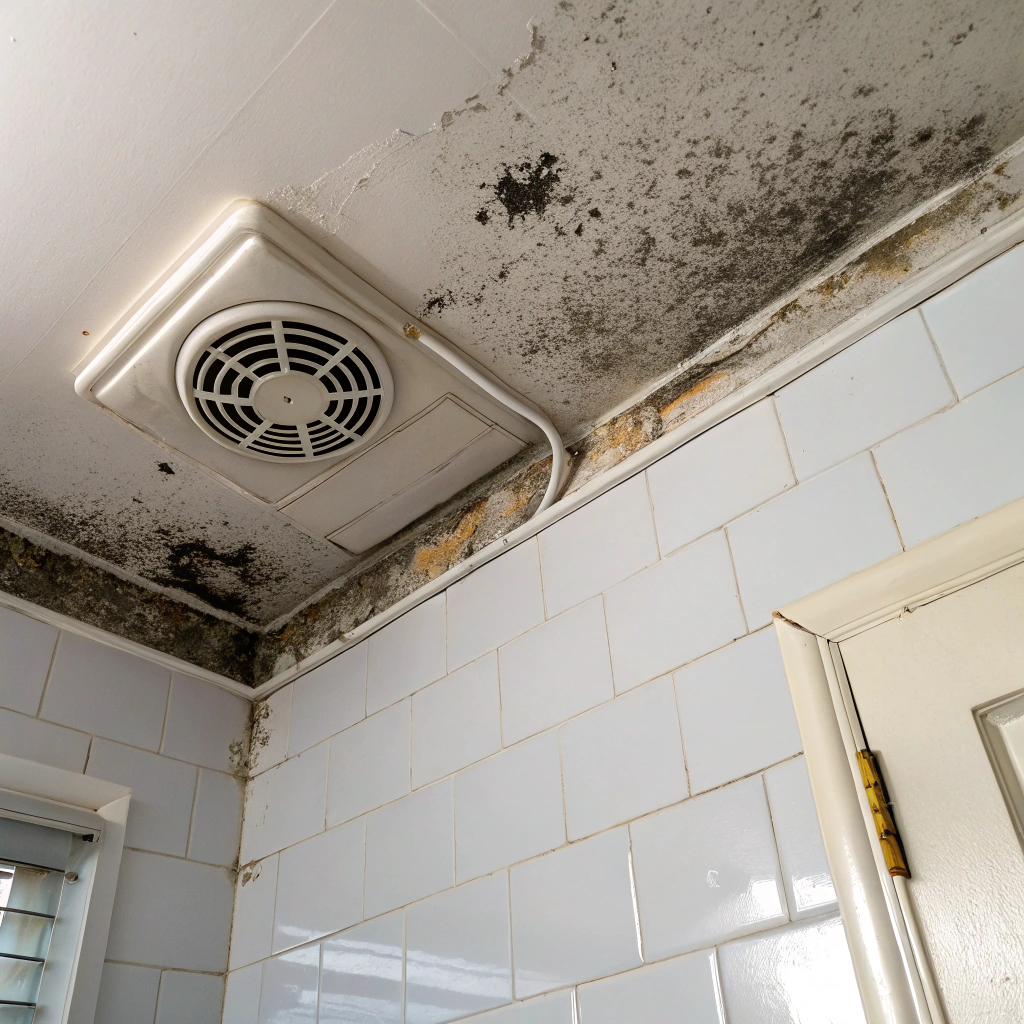
A contaminated shared HVAC system or a blocked exhaust ventilation stack doesn’t just affect one lot — it distributes mould spores across multiple units simultaneously. Treating individual lots without addressing the shared system is a short-term fix at best.
External Facades and Balconies
Newcastle’s direct coastal exposure accelerates the deterioration of facade sealants, balcony waterproofing membranes, and external cladding systems. Salt air degrades materials faster than in inland locations, and the resulting moisture ingress produces mould on internal wall surfaces that lot owners incorrectly attribute to internal causes.
Stairwells and Lift Shafts
Condensation accumulation and water ingress in stairwells and lift shafts often go undetected for extended periods. These vertical circulation spaces sit outside any individual lot owner’s line of sight — which means mould can establish and spread through the building structure before a complaint is even raised.


Governance, Documentation and Compliance for Strata Managers
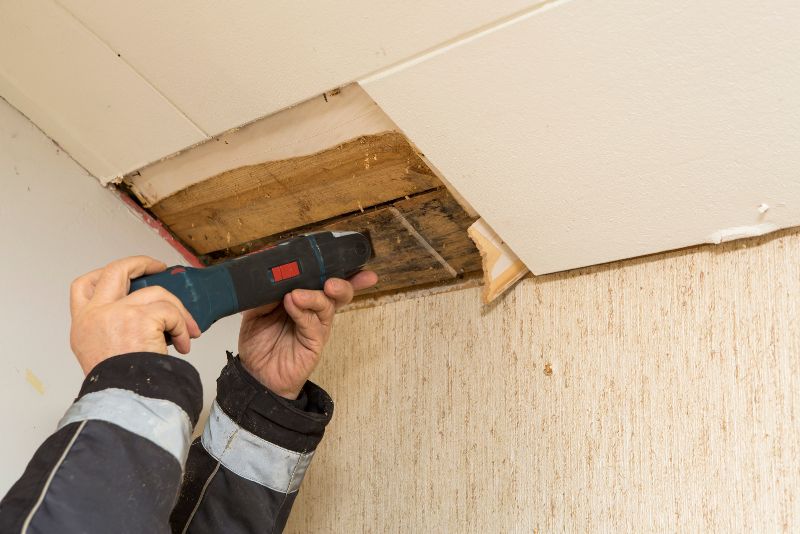
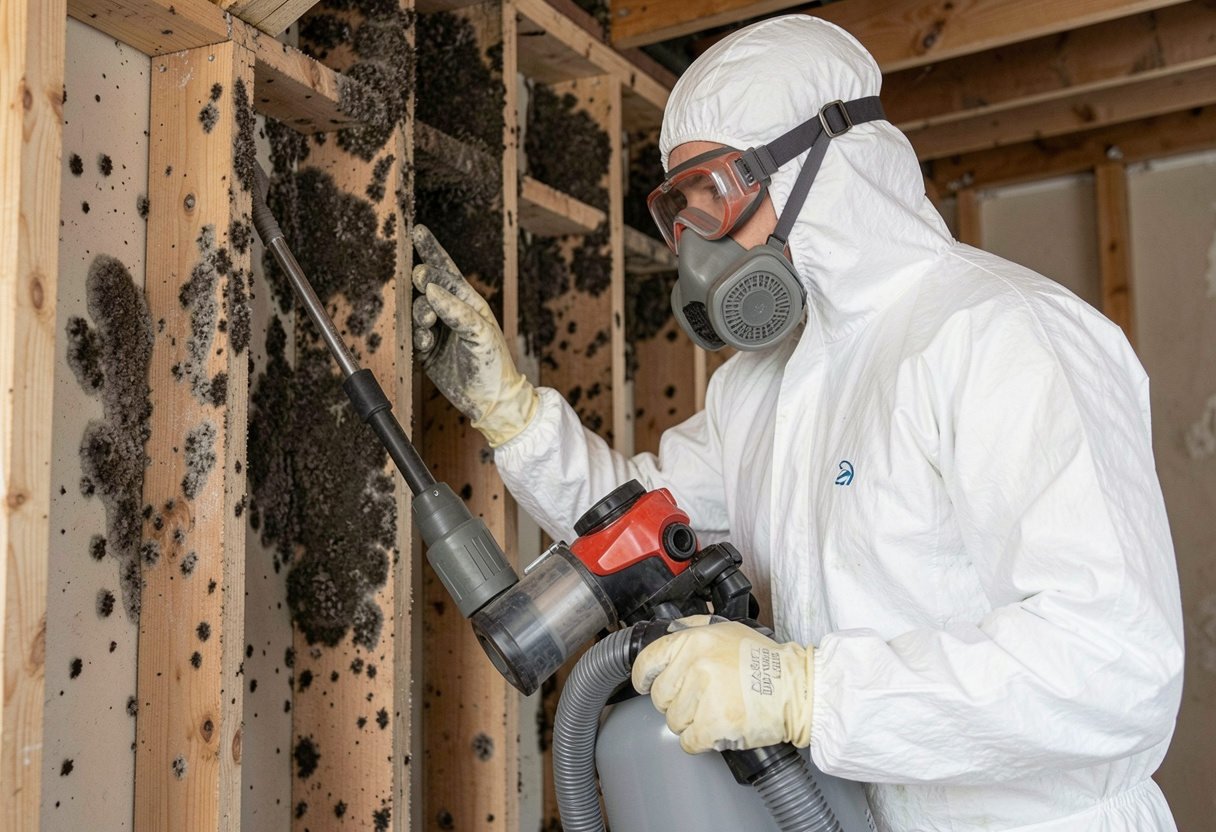
Strata mould remediation involves more than simply removing visible mould—it requires thorough documentation, compliance, and clear communication to support owners corporations and strata managers. We provide detailed scopes of work that can be used for committee reviews and approval processes, making it easier to obtain authorisation for remediation works. Following treatment, comprehensive reports document the affected areas, remediation methods used, outcomes achieved, and any recommended follow-up actions.
Where required, air quality clearance certificates can be provided to verify that remediation has been completed to an appropriate standard. All work carried out in occupied common areas is supported by Safe Work Method Statements to help meet workplace health and safety requirements and minimise risk for the owners corporation. We also work directly with insurance assessors when mould issues are linked to insurable events, supplying moisture assessments, remediation details, and supporting documentation to assist with claims. This structured approach gives strata managers confidence that mould issues have been professionally addressed while maintaining clear records for future reference, compliance, and stakeholder communication.
Newcastle's Strata Mould Problem Is Getting Bigger
Newcastle’s strata market has grown substantially across the CBD, Honeysuckle precinct, and Hamilton over the past two decades. That building stock is now ageing. Buildings put up in the 1980s and 1990s are hitting the point where original waterproofing membranes, expansion joints, and facade sealants are reaching the end of their serviceable life — and the mould events that follow building envelope failure don’t resolve themselves.
Newcastle’s coastal position compounds this. Salt air, direct ocean exposure, and the humidity pressure that sits over the Hunter year-round accelerates facade deterioration at a rate inland strata buildings don’t experience. Recent severe storm seasons have added balcony and flat roof waterproofing failures across the strata building stock at a pace that is keeping strata managers busy across the region.
This isn’t a short-term trend. The combination of ageing building envelopes and Newcastle’s coastal climate means strata mould remediation demand in this region will continue to grow — and owners corporations that respond to building envelope failures quickly, with properly documented remediation, are protecting both the building and the body corporate’s legal position.
Ready to Sort It Out? Let's Talk.
Dealing with a mould complaint in a strata building moves fast — lot owners are calling, the committee wants answers, and the clock is ticking on common property liability. The sooner the moisture source is identified and documented, the cleaner the governance process from that point forward.
We work directly with strata managers and body corporate committees across Newcastle — from the first site assessment through to final clearance documentation. One call gets you a clear picture of what you’re dealing with and what the response needs to look like.
FAQs About Strata & Body Corporate Mould in Newcastle
How quickly can you respond to a mould complaint in a Newcastle strata building?
In most cases we can get to site within 24 to 48 hours of your call — we know a lot owner complaint sitting unacknowledged puts the strata manager in a difficult position. Newcastle’s humidity and coastal conditions mean mould can spread faster than in drier climates, so a prompt assessment protects both the building and the body corporate’s response timeline. Getting eyes on it quickly also means we can give you something in writing before the committee starts asking questions.
What does a boundary assessment report actually cost, and does the owners corporation pay for it?
The assessment cost is modest relative to the governance value it provides, and in most cases it’s a legitimate body corporate expense because it directly informs a decision about common property. We can provide a written quote upfront so the strata manager has a figure ready for committee approval before we set foot on site. Where the assessment confirms a building envelope defect, that report often forms the basis of a strata insurance claim that recovers the cost anyway.
Can you manage access across multiple lots when a mould event affects more than one apartment?
Yes — coordinating multi-lot access is something we handle regularly across Newcastle strata buildings, particularly in older CBD and Honeysuckle apartment blocks where a single waterproofing failure can track moisture into several units simultaneously. We work around resident schedules, sequence the treatment logically, and keep the strata manager updated throughout rather than leaving them to chase progress. One point of contact for the whole job makes the strata manager’s life considerably easier.
Do Newcastle's coastal conditions mean strata buildings here need more frequent mould inspections than average?
Honestly, yes. The salt air, ocean-facing humidity, and the storm seasons we get off the Hunter coast accelerate facade and membrane deterioration at a rate that inland buildings simply don’t experience. I’d recommend strata managers in Newcastle schedule a building envelope and common area mould inspection every 12 months for buildings over 15 years old — catching early moisture ingress before it becomes a visible mould event is far cheaper than a reactive remediation. It also gives the body corporate a documented maintenance record, which matters for insurance purposes.
What happens if a lot owner is claiming the mould is the body corporate's problem but we're not sure that's correct?
That’s exactly the situation our boundary assessment is designed to resolve — without it, the strata manager is stuck in the middle of a dispute with no objective evidence to work from. We inspect the moisture source, document our findings, and provide a written assessment that classifies the likely property boundary responsibility based on what we actually find on site. That gives the committee a defensible position to communicate back to the lot owner, whether the answer goes in their favour or not.
Are you familiar with the strata insurance claim process in NSW, and can you help with documentation?
Yes — we deal with strata insurers regularly and understand what assessors need to approve a mould remediation claim in NSW. We provide moisture source evidence, a detailed remediation scope, post-treatment reports, and clearance certificates in formats that align with what insurers expect to see. If you’ve got an open claim or you’re about to lodge one, let us know upfront and we’ll make sure everything we produce supports that process from day one.
