
Fast Storm Damage Recovery Throughout Newcastle and the Hunter Region
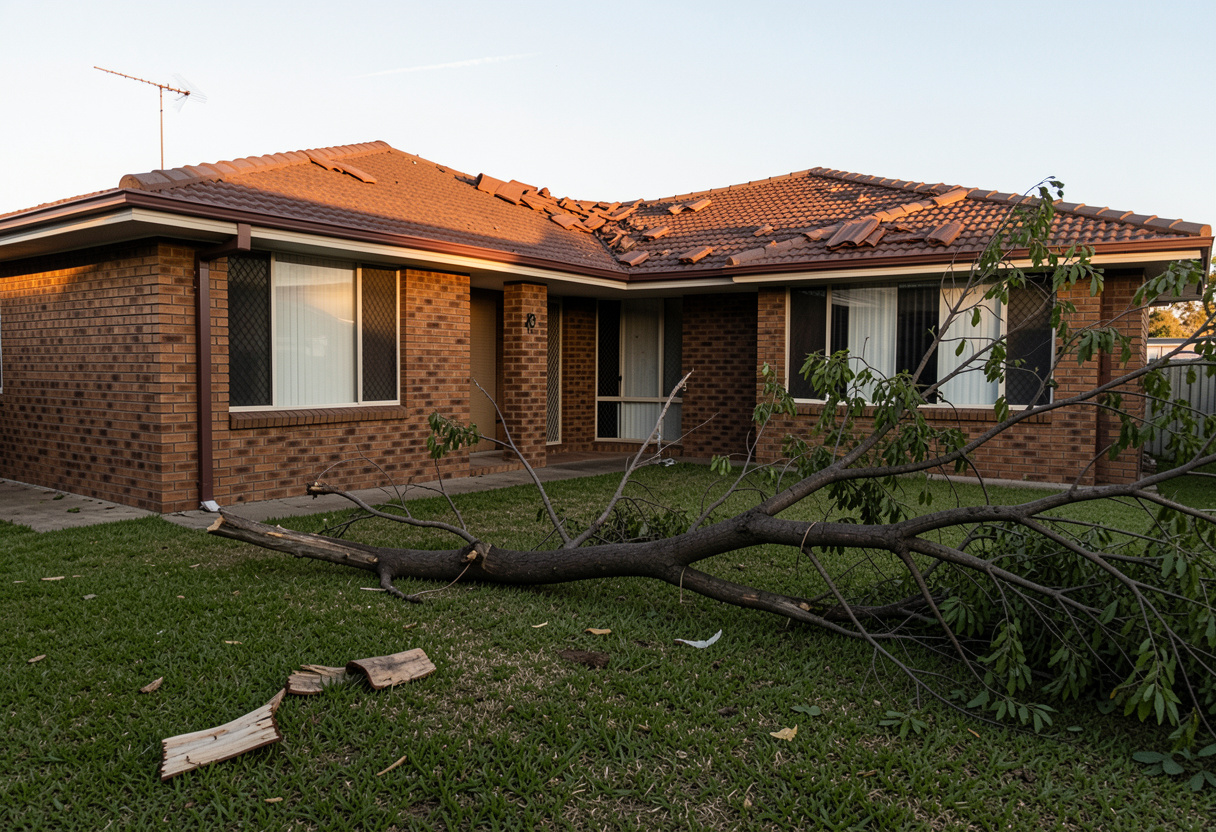
Newcastle sits in one of Australia’s most storm-active coastal corridors. East coast lows, severe thunderstorms, and summer hail events roll through the Hunter region year after year — and when they do, they don’t discriminate. Roof tiles get displaced, gutters fail, water tracks into wall cavities, and suddenly a family home in Merewether or a commercial building in Hamilton is soaking from the inside out.
Storm damage restoration in Newcastle isn’t a niche emergency call-out. It’s a high-demand, fast-response service that we’re specifically built to deliver. We attend storm-affected properties across the Newcastle region 24 hours a day, with temporary protection measures, full moisture mapping, and complete structural drying — all backed by insurance-ready documentation. If the storm has already hit, we’re the local specialist you call first.

Types of Storm Damage We Respond To
Our Storm Damage Restoration Process
Emergency Attendance and Site Assessment
We attend storm-affected properties 24 hours a day across the Newcastle region. On arrival, we carry out a safe site assessment to identify all active ingress points and any structural safety issues before work begins.
Temporary Weather Protection
Roof tarping, temporary sealing of breached openings, and emergency boarding of structural gaps stop ongoing water entry while permanent repairs are arranged. This step is non-negotiable — restoration work done in a still-wet building is restoration work that’ll need doing again.
Water Extraction from Affected Areas
Industrial extraction equipment removes standing water from all affected interior areas — floors, subfloor cavities, and wall spaces — as quickly as possible to limit the spread of saturation into surrounding materials.
Moisture Mapping with Thermal Imaging
Every water-affected surface is moisture mapped using thermal imaging cameras and calibrated moisture meters. Storm water doesn’t travel in straight lines — it follows cavities, framing members, and insulation paths that aren’t visible without the right equipment.
Removal of Non-Salvageable Materials
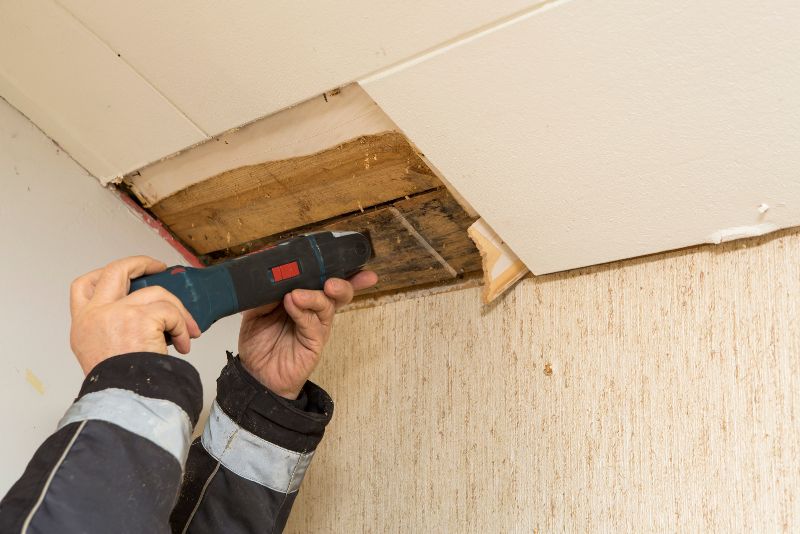
Saturated ceiling plasterboard, insulation batts, and water-damaged flooring that can’t be dried in place are removed. Leaving compromised materials behind traps moisture and provides exactly the conditions mould needs to establish within 24 to 48 hours.
Industrial Drying Equipment Placement
High-capacity air movers and dehumidifiers are placed throughout the affected areas. Daily moisture monitoring tracks progress against target readings — equipment stays until the structure meets verified drying standards, not just until it looks dry.
Antimicrobial Treatment
Antimicrobial treatment is applied to all affected structural surfaces during the drying phase. Storm water carries organic matter, debris, and contaminants that accelerate mould growth — treatment during drying is far more effective than treating mould after it’s already established.
Post-Drying Verification and Restoration Report
Final moisture readings across all affected areas are recorded and compared against baseline dry standards. A formal restoration report documents all findings, work completed, moisture readings, and photographic records — ready for your insurance claim.


Mould Risk After Storm Damage
Storm damage and mould growth are directly connected — and the window between water ingress and mould establishment is shorter than most people expect.
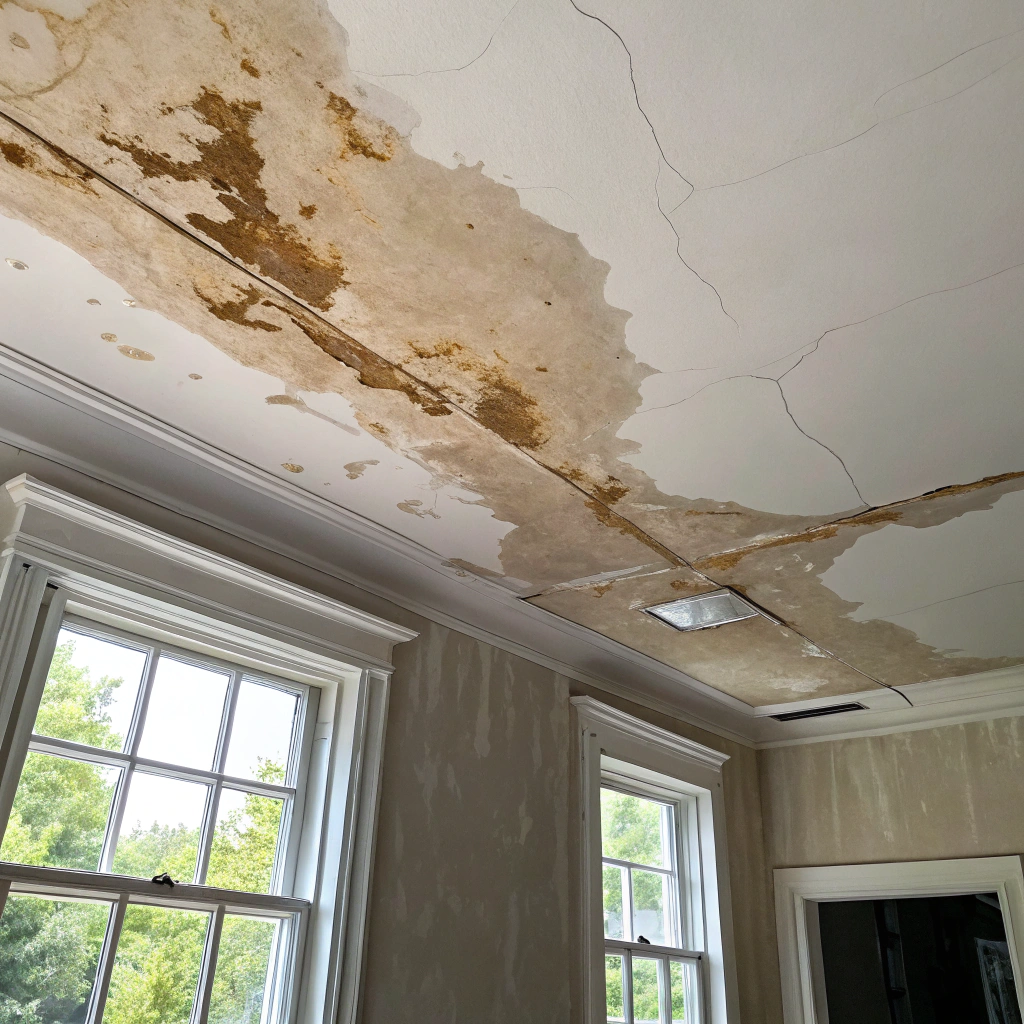
Ceiling and wall cavities saturated by roof leak ingress reach the humidity conditions mould needs within 24 to 48 hours. The problem with storm water specifically is that it follows hidden pathways — it travels through ceiling insulation, runs down internal wall framing, and pools in subfloor spaces that aren’t visibly accessible from inside the home. By the time water staining appears on a ceiling or wall, saturation has typically extended well beyond what’s visible.
Professional moisture mapping after any storm damage event is the only way to identify the full extent of water penetration. Thermal imaging routinely finds moisture in areas that show no visible water damage at the time of inspection — and those are exactly the areas where mould colonies establish first.
Storm damage doesn't wait — and neither should you.
Every hour after a storm event, water is moving further into your walls, ceilings, and subfloor. The faster ingress is stopped and drying begins, the less structural damage you’re dealing with — and the lower your risk of a mould problem developing behind the scenes.
We’re available 24/7 across the Newcastle region. Call us now for fast attendance, temporary weather protection, and full storm damage restoration — backed by complete insurance documentation from day one.
FAQs About Storm Damage Restoration Newcastle
How quickly can you get to my property after a storm in Newcastle?
We attend storm-affected properties across the Newcastle region 24 hours a day, so in most cases we can be with you within a few hours of your call — even overnight or on weekends. East coast lows don’t hit between 9 and 5, and our response doesn’t either. The sooner we’re on site, the sooner we can stop ongoing water entry and protect your home from further damage.
My ceiling is stained but not visibly wet — do I still need a professional assessment?
Yes, and this is actually one of the most common situations we see in Newcastle homes after a storm. A dry-looking ceiling stain almost always means water has already moved through insulation and into the ceiling cavity above — it just hasn’t saturated through to the point of dripping yet. Without moisture mapping, there’s no way to know how far it’s spread or whether mould is already establishing in the cavity.
Will my home insurance cover storm damage restoration in Newcastle?
In most cases, yes — storm damage is a covered event under standard Australian home insurance policies, and water ingress caused directly by a storm event is generally included. Where claims run into trouble is when insurers argue that pre-existing maintenance issues — like aged terracotta tiles or deteriorated guttering — contributed to the damage, which is genuinely common in older Newcastle housing stock. We provide full moisture mapping reports, photographic documentation, and a restoration completion certificate that gives your insurer everything they need to assess the claim properly.
How is storm damage restoration different from regular water damage restoration?
The core drying and moisture mapping work is similar, but storm damage jobs almost always start with a compromised building envelope — meaning the roof, walls, or structure is still open to the weather when we arrive. That means temporary protection comes first, before any restoration work begins, which isn’t typically a factor in a burst pipe or appliance leak situation. Storm water also carries debris and organic contaminants that increase mould risk, so antimicrobial treatment is a standard part of every storm job we do in Newcastle.
My property is in Merewether — are beachside homes at higher risk of storm damage?
Absolutely, and it’s something we see consistently after every significant weather event across the beachside suburbs. Ocean-facing properties in Merewether, Bar Beach, and Stockton cop wind-driven rain at intensities that inland suburbs simply don’t experience — and that lateral rain pressure forces water through window seals, weatherboards, and roof junctions that would hold up fine in a normal downpour. If your home is within a few streets of the coast, even a moderate east coast low can push moisture into places you wouldn’t expect.
Can storm damage cause mould even if the water dried out on its own?
Yes — and this is one of the most common mistakes Newcastle homeowners make after a storm event. Water that appears to have dried from the surface has very often remained trapped inside wall cavities, ceiling insulation, and subfloor spaces where airflow can’t reach it. Those concealed pockets of moisture are exactly where mould establishes first, and by the time you can see or smell it, the colony is already well developed.
