
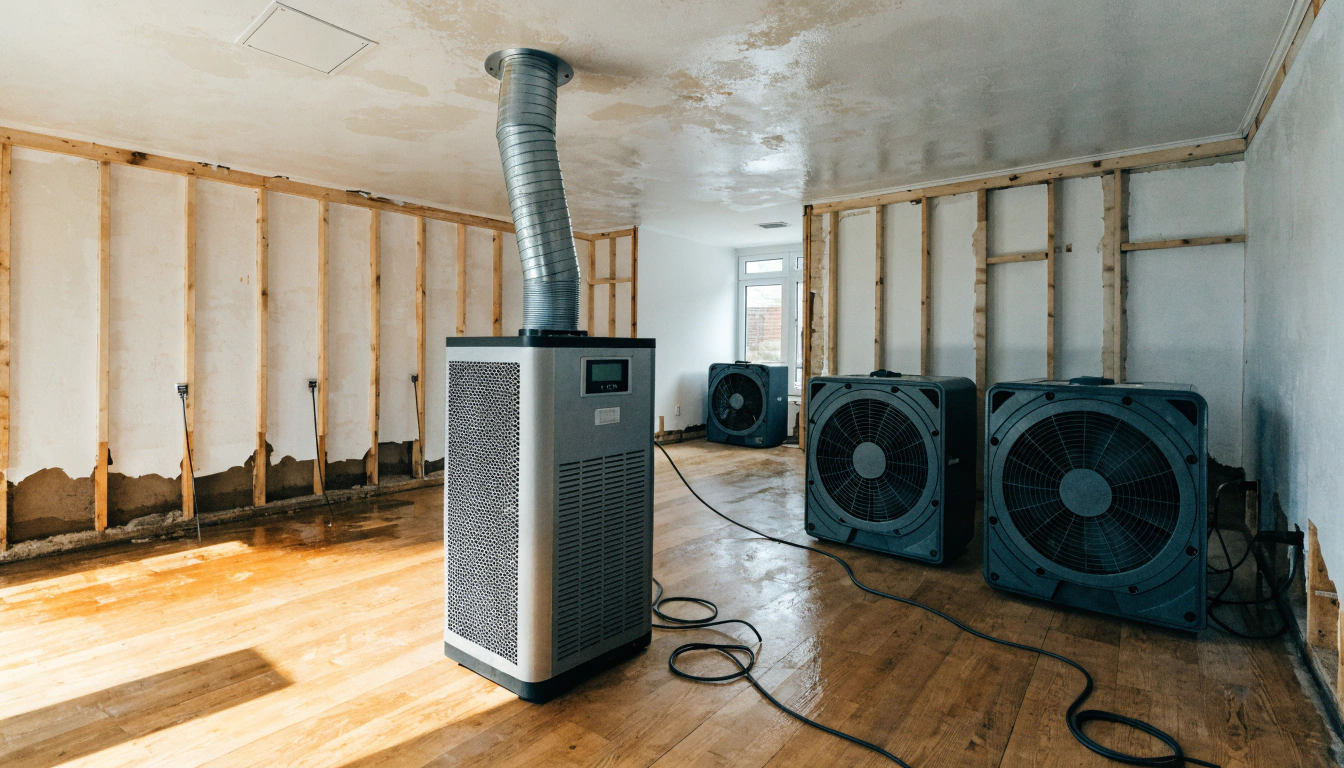
Burst Pipe Water Damage Restoration Newcastle
Burst pipe water damage restoration is one of the most time-sensitive property emergencies a Newcastle homeowner or building manager will face. Water released from a pressurised supply line doesn’t pool neatly in one spot — it tracks along floor joists, through wall cavities, into subfloor spaces, and across ceiling voids, following the path of least resistance through your building’s structure. What appears as a wet patch on the floor is rarely the full picture.
Newcastle properties face particular exposure to pipe-related water damage given the age of local housing stock across suburbs like Hamilton, Mayfield, Islington, and Wallsend, where original copper and galvanised steel plumbing installations are reaching and exceeding their service life. Combined with the region’s coastal humidity and temperature cycling, pipe failures in Newcastle carry a higher risk of concealed structural moisture and accelerated mould development than many other markets.
Our burst pipe water damage restoration service covers the full scope — emergency attendance, water extraction, moisture mapping, structural drying, and insurance documentation — delivered across Newcastle, NSW, with 24-hour availability.

Common Burst Pipe Scenarios in Newcastle Properties
Burst pipe water damage in Newcastle presents across a predictable set of scenarios, each with distinct characteristics that shape the restoration scope and response required.
Ageing copper and galvanised steel plumbing in older properties across Hamilton, Islington, Mayfield, and Wickham is among the most frequent failure points — original pipe installations in homes built before the 1980s are well past their design service life. Hot water system failures represent another high-volume scenario, releasing large quantities of water directly into ceiling and wall cavities where damage can spread undetected across multiple rooms before becoming visible.
Flexible braided hose failures on toilet cisterns and under-sink connections are among the most damaging household pipe events relative to their size — a failed flexi hose on a pressurised line can discharge continuously for hours. Slab pipe leaks in concrete slab homes across Newcastle’s western suburbs cause widespread subfloor and under-slab moisture that builds over extended periods. In strata buildings, a single pipe failure can track water damage through floor and ceiling structures across multiple lots below.
Ageing Plumbing in Older Newcastle Homes
Older Newcastle suburbs carry a high concentration of properties with original plumbing installations running well beyond their expected service life. Federation homes, Californian bungalows, and the workers’ cottages common across Mayfield, Waratah, Wickham, and Islington were typically plumbed with copper or galvanised steel pipework — materials that, under Newcastle’s coastal humidity and decades of temperature cycling, deteriorate from the inside out long before any external signs appear.
Galvanised steel pipes are particularly prone to internal corrosion and scaling, which progressively restricts flow and weakens pipe walls over time. Copper pipework in properties with aggressive water chemistry or inadequate earthing can develop pinhole leaks that build slowly before failing. In both cases, failure frequently occurs inside wall cavities or subfloor spaces where water is released undetected.
For Newcastle homeowners in older properties, a burst-pipe water-damage event typically involves far greater concealed moisture spread than in properties fitted with modern PEX or CPVC plumbing — making professional moisture mapping on attendance an absolute restoration priority.
Flexible Hose Failures — The Most Overlooked Household Risk
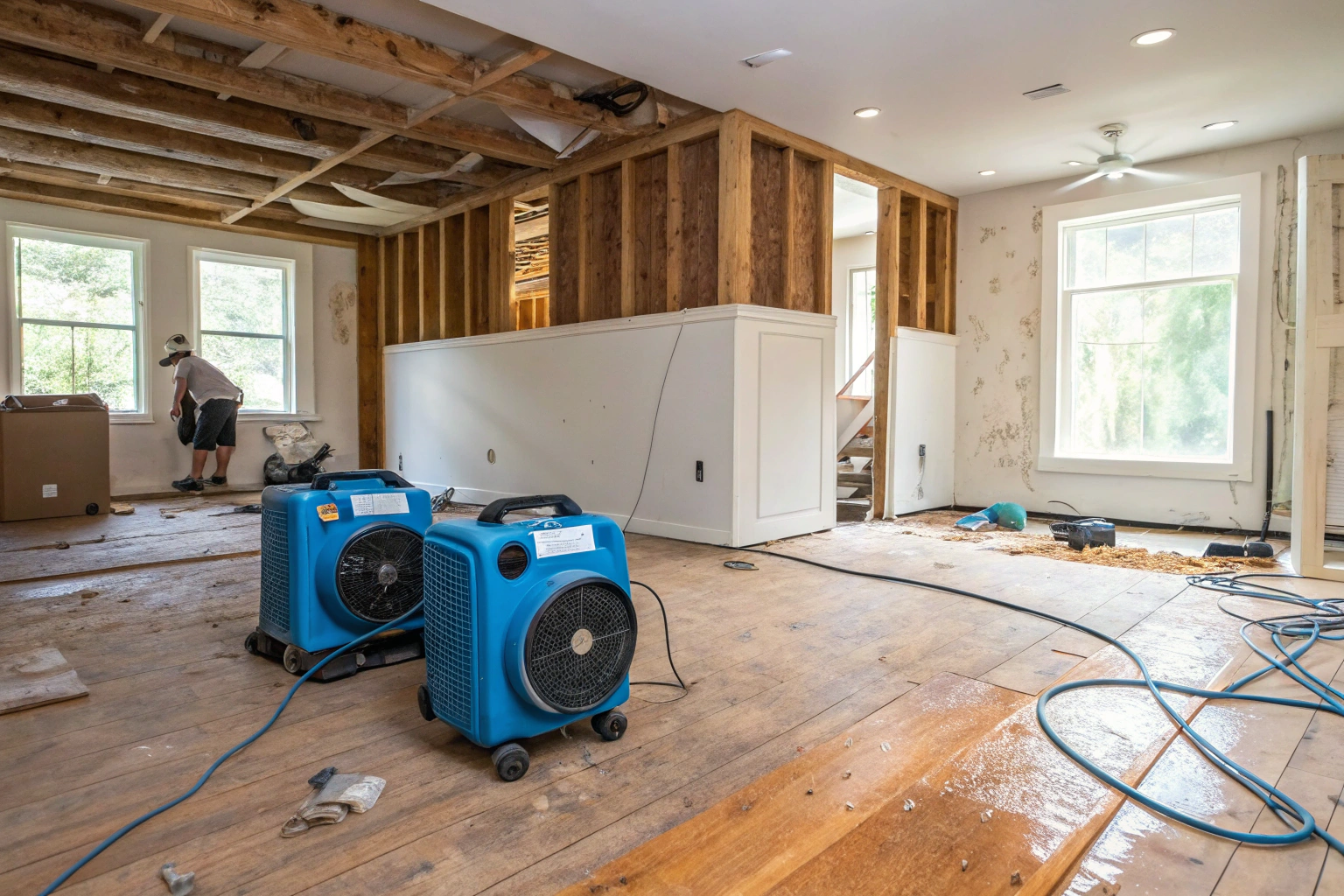
Flexible braided hoses are among the most failure-prone components in any residential or strata property — and among the least inspected. These short connector hoses link pressurised water supply lines to toilets, vanities, kitchen sinks, washing machines, and dishwashers throughout a property. Despite their small size, a failed flexi hose on a continuously pressurised line can discharge at mains pressure for hours, releasing thousands of litres before the damage becomes visible.
The most common flexible hose failure points in Newcastle properties include:
- Toilet cistern connections — typically the highest-risk location given continuous pressurisation and infrequent inspection
- Under-sink vanity and kitchen connections — concealed inside cabinets, where slow weeping goes unnoticed
- Washing machine inlet hoses — subject to vibration fatigue and rubber degradation over time
- Dishwasher connections — often installed once and never inspected again
Flexi hose failures are particularly damaging in strata properties and multi-storey homes where a ground or upper floor failure discharges water directly intothe ceiling and floor structures of the levels below. Our burst pipe water damage restoration response to flexible hose events covers full moisture mapping across all affected levels as standard.
Structural Drying, Air Movers and Dehumidifier Placement
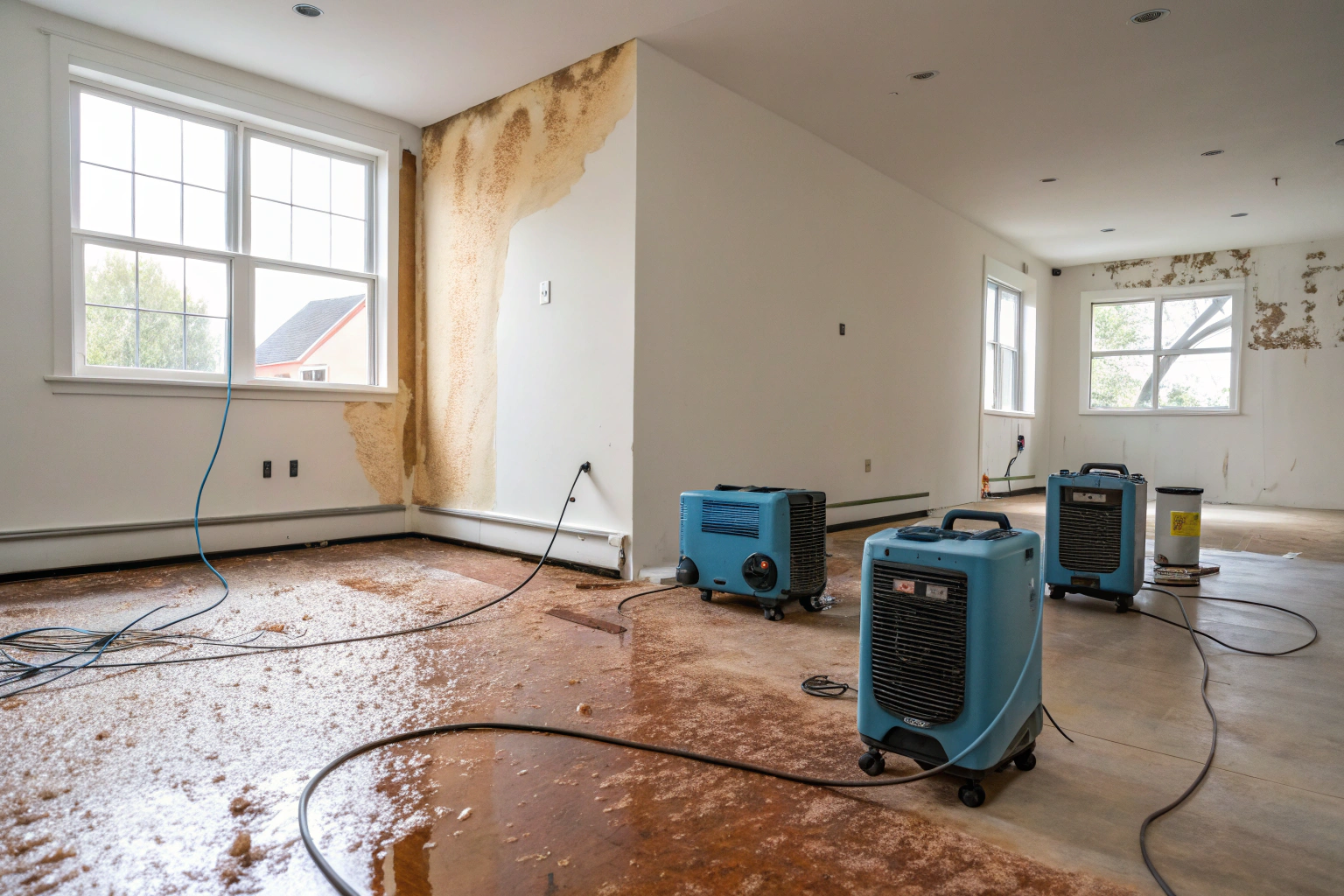
Once water extraction is complete, the extent of moisture migration has been established through thermal imaging and moisture mapping, and structural drying equipment is positioned according to the specific moisture map findings — not placed generically across the affected area.
Industrial air movers are directed at wall cavities, floor surfaces, and ceiling voids identified as carrying elevated moisture readings, creating targeted airflow patterns that draw moisture out of building materials and into the air column. Commercial dehumidifiers then extract that moisture-laden air and discharge it as condensate, progressively reducing the vapour pressure within the affected space and accelerating the drying of concealed structural elements.
Equipment placement is reviewed and adjusted at each daily monitoring visit against updated moisture meter readings across all structural materials. Drying continues until all timber framing, plasterboard, flooring substrates, and subfloor components return to target moisture levels confirmed by calibrated measurement — not by visual assessment alone. A drying log is maintained throughout for insurance documentation purposes.
Antimicrobial Treatment and Mould Prevention During Drying
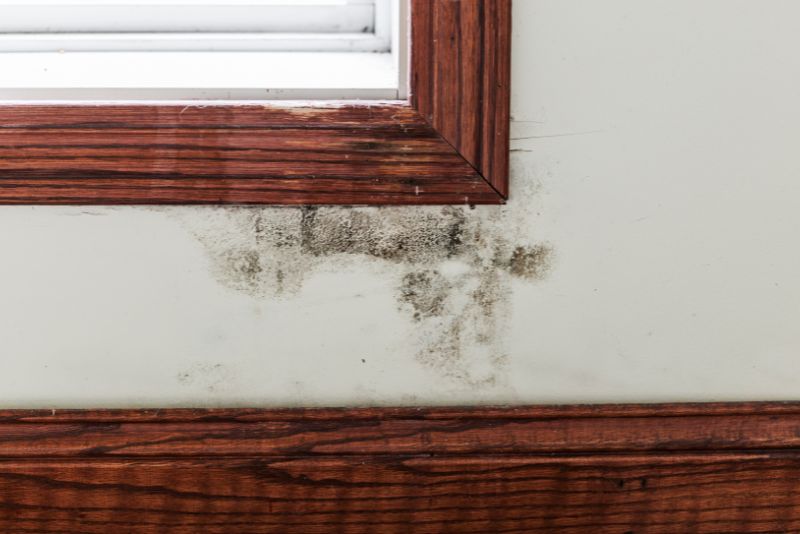
Mould development following a burst pipe event doesn’t wait for the drying process to finish. Under Newcastle’s coastal humidity conditions, mould colonisation of wet building materials can begin within 24 to 48 hours of a water release — making antimicrobial treatment during the active drying phase a standard component of professional burst pipe water damage restoration, not an optional add-on.
Following water extraction and before drying equipment placement, all affected surfaces receive a full application of antimicrobial treatment — covering exposed wall framing, floor joists, subfloor surfaces, plasterboard edges, and any other structural material carrying moisture. Where non-salvageable materials such as saturated plasterboard or insulation have been removed, the underlying framing and cavities are treated before drying equipment is introduced.
Treatment is reapplied where required at daily monitoring visits based on conditions observed. On completion of the drying process, a final antimicrobial application is carried out across all previously affected surfaces as part of the restoration sign-off procedure — providing documented mould prevention coverage for insurance reporting purposes.
The Burst Pipe Water Damage Restoration Process
| Stage 1: Emergency Attendance & Safety Assessment | Stage 2: Water Extraction & Moisture Mapping | Stage 3: Structural Drying & Final Verification |
|---|---|---|
| On arrival, our team conducts an immediate safety assessment before any restoration work begins. Electrical isolation of affected areas is completed where required. The water source is confirmed as isolated, the extent of visible damage is assessed, and a restoration scope is established based on initial site conditions and moisture readings. | Rapid water extraction is carried out across all affected floor surfaces and cavities. Thermal imaging and calibrated moisture meters map the full extent of water migration — identifying concealed moisture in wall cavities, ceiling voids, subfloor spaces, and under-slab areas. Saturated materials that cannot be dried in place are removed according to the moisture map findings. | Industrial air movers and commercial dehumidifiers are positioned according to moisture map findings and adjusted at each daily monitoring visit. Antimicrobial treatment is applied throughout the drying phase. On confirmation that all structural materials have returned to target moisture levels, a formal restoration completion report is issued for insurance claim purposes. |
24-Hour Burst Pipe Water Damage Response Across Newcastle
Burst pipe water damage restoration is not a business-hours service. Pipe failures happen overnight, across long weekends, and while properties sit vacant between tenancies — and the structural damage timeline doesn’t pause while you wait for a callback. Our team operates with 24-hour response capability across Newcastle and the broader Hunter region, attending burst pipe events at any hour with a fully equipped restoration crew.
We service the full Newcastle metropolitan area including Hamilton, Mayfield, Islington, Wallsend, Charlestown, New Lambton, Merewether, Bar Beach, Stockton, and Newcastle CBD, as well as surrounding Lake Macquarie and Hunter Valley localities. Whether the event involves a residential property, strata building, commercial premises, or rental property, our response and restoration scope remains consistent — rapid attendance, full moisture mapping, structural drying, and complete insurance documentation provided as standard on every job.
When a burst pipe has discharged into your property, a fast professional response is the single most effective way to contain the restoration scope and cost.



Frequently Asked Questions — Burst Pipe Water Damage Restoration Newcastle
Contact a professional restoration team immediately after isolating the water source. Every hour of delay allows water to migrate further into concealed structural areas, increasing damage scope, restoration cost, and the risk of mould development within affected building materials.
Burst pipe water damage is among the most commonly covered events under standard Australian home and contents insurance policies. Most policies cover sudden and accidental water damage from pipe failures. Review your policy schedule or contact your insurer to confirm your specific coverage conditions.
Water from a pressurised pipe failure tracks through floor joists, wall cavities, ceiling voids, and subfloor spaces well beyond the visible affected area. Concealed moisture spread is the primary risk and requires professional thermal imaging and moisture mapping to identify fully.
Restoration timeframes depend on the volume of water released, the building materials affected, and the extent of concealed moisture migration. Most residential burst pipe restoration projects require between three and seven days of active structural drying following initial water extraction and material assessment.
In most cases, occupants can remain in the property during restoration, depending on the affected areas and the extent of material removal required. Our team will advise on access requirements and any areas that need to remain clear during the active drying phase.
Moisture mapping uses thermal imaging cameras and calibrated moisture meters to identify the full extent of water migration beyond the visible affected area. For burst pipe events, moisture mapping is critical because pressurised water travels through concealed pathways that are not visible on the surface.
Get Fast Burst Pipe Water Damage Restoration in Newcastle
When a burst pipe has released water into your property, every hour matters. Saturated building materials, concealed moisture migration, and the early stages of mould development are all progressing while the property sits unattended — and the longer professional restoration is delayed, the greater the structural damage and the higher the eventual restoration cost.
Our team provides burst pipe water damage restoration across Newcastle, with 24-hour emergency response, full moisture mapping and structural drying, and complete insurance documentation delivered as standard on every job. We attend fast, work methodically, and provide your insurer with everything required to process your claim efficiently.
Call us now for immediate attendance. Our team is available around the clock and ready to respond across Newcastle and the Hunter region today.
