
What a Professional Mould Inspection Covers
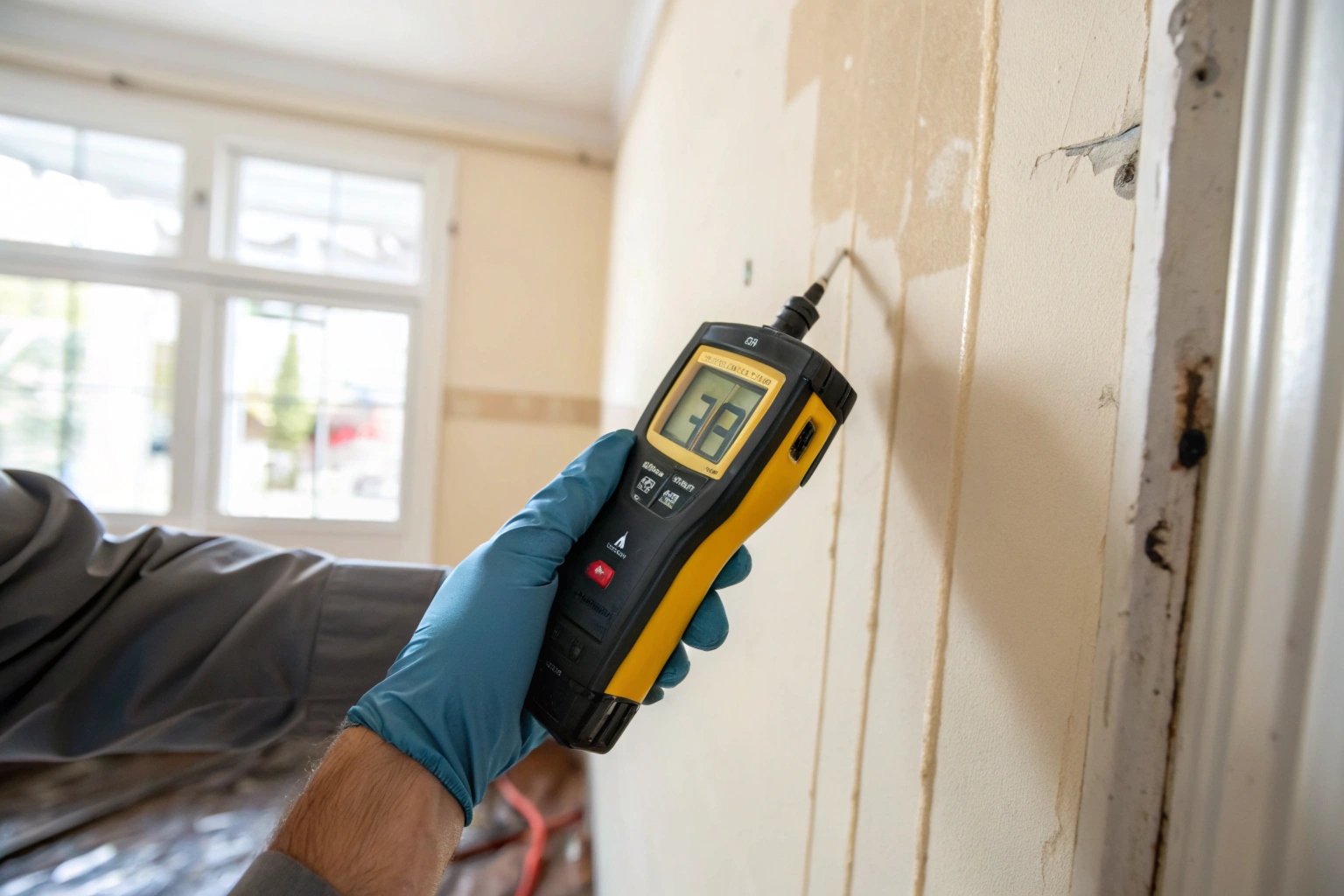
A professional mould inspection goes well beyond a visual walkthrough. Our inspectors work through a structured assessment process that covers every accessible area of the property — from the subfloor to the roof space — using calibrated instruments to detect moisture that isn’t visible to the naked eye.
The inspection scope includes:
• Visual assessment of all accessible areas including walls, ceilings, floors, cabinetry, and built-in wardrobes
• Moisture meter readings across surfaces to identify elevated moisture levels in plaster, timber, and masonry
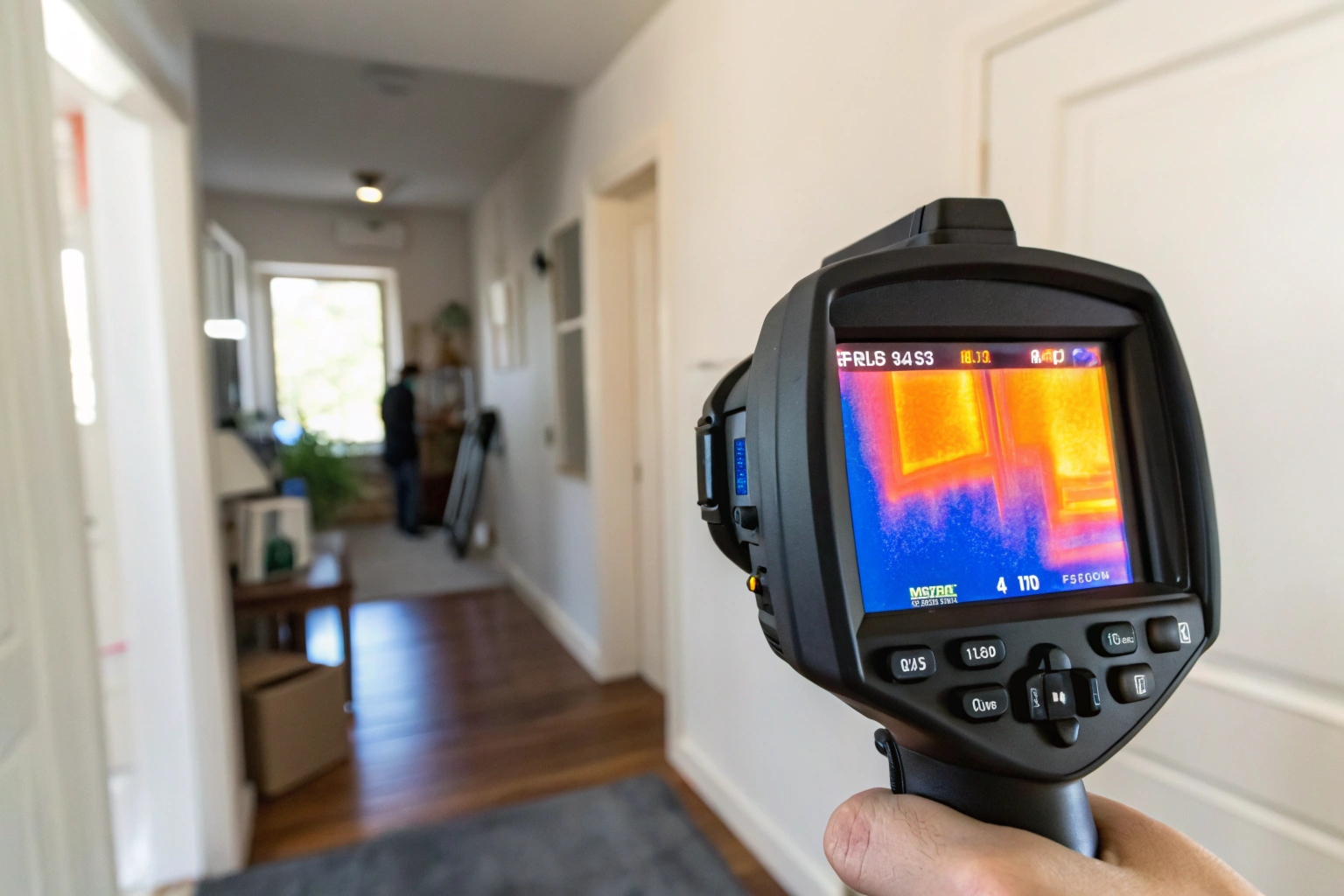
• Thermal imaging to detect hidden moisture pockets behind wall linings, under flooring, and above ceiling sheets
• Ventilation assessment to identify airflow deficiencies that create conditions for mould growth
• Contributing factor identification — plumbing leaks, rising damp, condensation patterns, and roof or window ingress
• Documented report outlining all findings, affected areas, moisture readings, and a plain-language recommended action plan
The difference between a professional inspection and a DIY check is the instrumentation. A moisture meter can identify a wet wall cavity before mould even becomes visible. Thermal imaging can locate a slow leak behind bathroom tiles that won’t show up for months. These tools don’t just confirm what you can already see — they find what you can’t. That’s the point of booking a professional mould inspection in Newcastle before committing to any treatment or remediation work.

Who Should Book a Mould Inspection
Mould inspection in Newcastle is relevant across a wide range of property situations — not just homes with visible mould growth.
Whatever the situation, accurate documented findings from a trained inspector remove the uncertainty — and give everyone involved a clear picture of what they’re actually dealing with.
When to Book Pre-Sale Property Cleaning in Newcastle
Newcastle’s geography creates mould pressure that most other Australian cities simply don’t experience at the same intensity. Sitting at the mouth of the Hunter River with direct Pacific Ocean exposure, the city deals with year-round coastal humidity that keeps moisture levels elevated even during drier months — and that humidity finds its way into homes through every gap, crack, and poorly sealed surface it can.
Older housing stock is a major contributing factor across inner suburbs like The Junction, Georgetown, Waratah, Mayfield, and Wickham. Many of these homes were built before modern vapour barriers and subfloor ventilation requirements existed. Original single-glazed windows sweat condensation constantly during cooler months. Subfloor spaces in homes built on sandy or clay-heavy soils trap moisture with no meaningful airflow to dry it out.
Coastal salt air accelerates the degradation of window seals and external cladding in ocean-facing suburbs, allowing moisture to work its way into wall cavities long before any internal staining becomes visible.
Recent storm seasons and East Coast Low events have left a significant number of Newcastle properties with concealed water damage in wall cavities, roof spaces, and subfloors — moisture that entered during a storm event weeks or months ago and has since developed into active mould growth the occupants haven’t yet located.
For properties across Newcastle and the broader Hunter region, these local conditions make a professional mould inspection not just a reactive measure — but a practical step in protecting the long-term condition of the building.

What You Receive After Your Mould Inspection
Booking a mould inspection in Newcastle with our team means walking away with more than a verbal summary. Every inspection concludes with a complete, documented package that gives you clear, actionable information — whether you’re planning remediation work, responding to a tenancy dispute, preparing for a property transaction, or simply trying to understand the extent of a problem you’ve been living with.
Your inspection report includes:
• Written findings report — a plain-language document outlining every area assessed, all moisture readings recorded, and the location and extent of any mould growth identified
• Photo documentation — timestamped images of all affected areas, visible mould growth, water staining, and any building defects contributing to moisture ingress
• Moisture meter readings — recorded data from surface assessments across walls, ceilings, and floors, giving you a measurable baseline to compare against after treatment
• Thermal imaging results — where applicable, imaging captures that identify hidden moisture behind wall linings and under floor coverings
• Recommended action plan — a clear, prioritised outline of next steps written in plain language, not technical jargon
This documentation is particularly valuable for tenants and landlords navigating a dispute, buyers and sellers requiring evidence for a property transaction, and property managers maintaining compliance records. The report is yours to keep, share with a remediation contractor, provide to your solicitor, or submit as supporting evidence in any formal process. It’s a complete record of the property’s condition at the time of inspection — nothing vague, nothing left open to interpretation.
Why Choose Our Newcastle Mould Inspection Team
Certified mould inspectors working across Newcastle and the Hunter region bring more than a checklist to every assessment. Our team carries calibrated moisture meters, thermal imaging cameras, and air quality testing equipment to every job — because a thorough mould inspection requires instrumentation, not just observation.
We work across all property types — detached homes, townhouses, strata units, rental properties, and commercial buildings — in suburbs across Newcastle, Lake Macquarie, the Hunter Valley, Maitland, and the Central Coast. Our inspectors know the local building stock well. They know what a 1970s fibro cottage in Waratah looks like from a moisture risk perspective. They know where subfloor problems typically originate in homes built on the sandy soils around Stockton and Fern Bay. That local knowledge shapes the way every inspection is carried out.
What sets our inspections apart:
• Instrument-assisted assessments — moisture meters and thermal imaging as standard, not optional extras
• Trained, certified inspectors — not generalist tradespeople carrying out mould checks as a side service
• Detailed written reports — delivered after every inspection, without exception
• No treatment upsell pressure — the inspection report stands on its own, and any recommended next steps are clearly separated from commercial interests
• Local expertise — inspectors who know Newcastle’s housing stock, climate conditions, and the specific risk profiles of inner and coastal suburbs
When the goal is an accurate picture of what’s actually happening inside a property, the quality of the inspection determines everything that follows.
Frequently Asked Questions About Mould Inspection in Newcastle
How long does a mould inspection take?
The duration depends on the size and complexity of the property. A standard residential inspection typically takes between 60 and 90 minutes. Larger homes, properties with subfloor access, or buildings where mould has been reported across multiple areas may take longer. Your inspector will give you a time estimate when you book.
Is a mould inspection the same as a building inspection?
No. A building inspection assesses the structural condition of a property across a broad range of categories. A mould inspection is a targeted, instrument-assisted assessment focused specifically on mould presence, moisture sources, and the conditions that allow mould to grow. The two serve different purposes and produce different reports.
Can mould hide in areas that aren't visible during an inspection?
Yes — and this is exactly why instrument-assisted inspection matters. Moisture meters and thermal imaging allow our inspectors to detect elevated moisture levels and hidden mould growth inside wall cavities, under flooring, and above ceiling linings without the need for destructive investigation in most cases.
Do I need to do anything to prepare for the inspection?
Clear access to all areas of concern where possible — including wardrobes, under-sink cabinets, and any rooms where mould or moisture has been noticed. If there is a subfloor access point, make sure it isn’t blocked. Your inspector will advise on anything specific when you book.
Will the inspection report be accepted for a tenancy dispute or NCAT proceeding?
Our written inspection reports are documented, timestamped, and produced by trained inspectors — making them suitable for use in tenancy disputes, maintenance requests, and formal proceedings including NCAT.
Book Your Mould Inspection in Newcastle Today
A mould inspection in Newcastle is the clearest, most reliable way to find out what’s actually happening inside your property — where the mould is, what’s causing it, and what needs to happen next. Without that foundation, any treatment carried out is working blind.
Whether you’ve spotted visible growth, noticed a persistent musty smell, or you’re dealing with a property transaction, a tenancy matter, or recurring mould that keeps coming back after cleaning — the inspection is where the answer starts.
Our certified inspectors service Newcastle, Lake Macquarie, Maitland, the Hunter Valley, and surrounding areas. Every inspection is carried out with calibrated instrumentation, and every assessment concludes with a written report, photo documentation, moisture readings, and a plain-language action plan you can act on immediately.
Getting started is straightforward:
• Call us to speak directly with our team and discuss your situation before booking
• Book online to secure an inspection time that works around your schedule
• Receive your report — a complete, documented assessment of your property’s mould and moisture condition
There’s no guesswork, no vague verbal summaries, and no pressure to commit to treatment before you’ve had the chance to review your findings. The inspection report is yours — a clear, honest record of your property’s condition at the time of assessment.
Contact our Newcastle team today to book your certified mould inspection and get the answers you need.
