
Newcastle Ceiling Mould Removal That Addresses the Real Cause
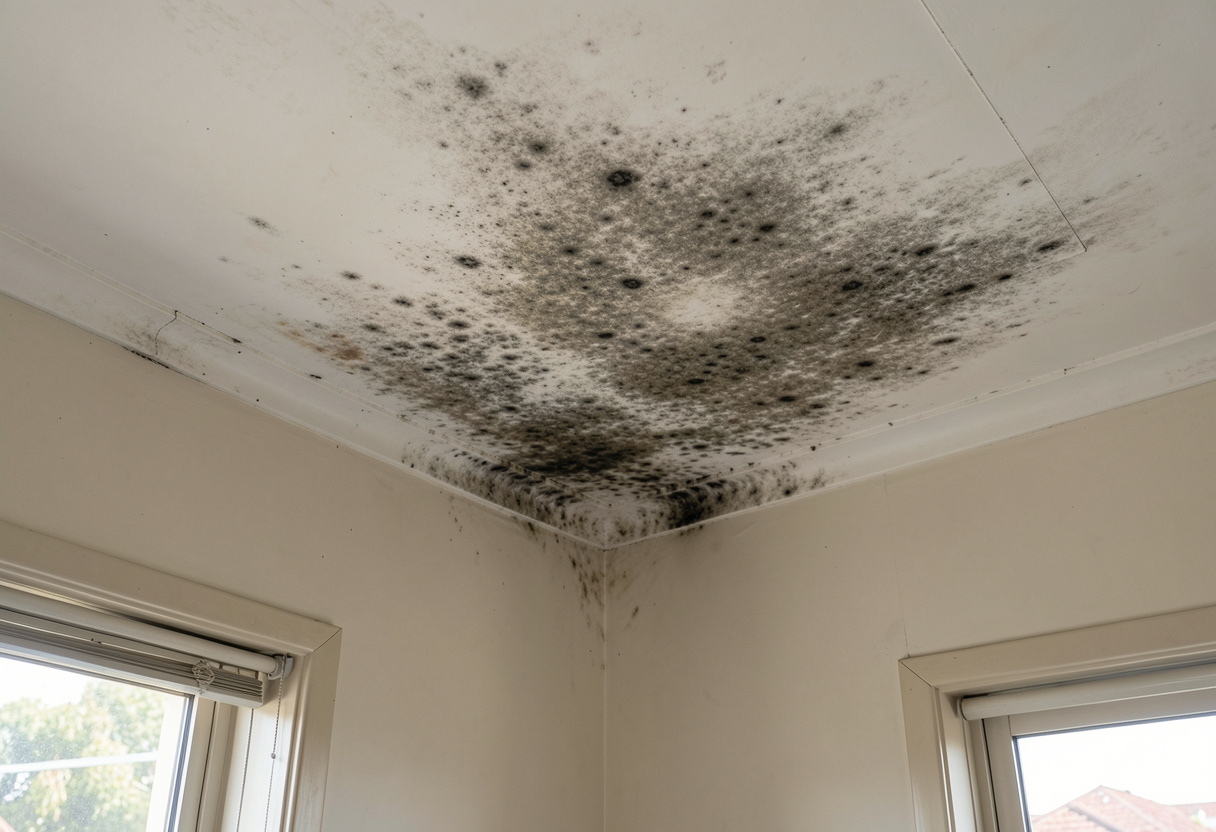
There’s something unsettling about looking up and seeing dark patches spreading across your ceiling. It starts as a small smudge — easy to dismiss — but before long it’s creeping outward, and you’re standing on a chair with a bottle of spray bleach wondering if you’re about to make it worse.
Ceiling mould removal in Newcastle is genuinely one of the trickier mould problems we deal with. Unlike a wall or floor, your ceiling fights back — gravity works against every application, finishes are easily damaged, and those spores don’t just sit there. They fall straight down into the air you and your family are breathing every single day.
We treat ceiling mould across Newcastle and the Hunter — from Merewether to Mayfield, Bar Beach to Wallsend — protecting your ceiling finish and tackling the moisture problem behind it, not just the surface stain.

Why Ceiling Mould Appears
The Risks of DIY Ceiling Mould Cleaning
Direct Spore Exposure
Scrubbing a mouldy ceiling while standing on a ladder puts your face directly below the work area. Dislodged spores fall straight into your eyes, nose, and mouth. Even with a basic mask, the exposure risk during DIY ceiling cleaning is significantly higher than most people expect before they start.
Paint and Finish Damage
Most Newcastle ceilings are finished with water-based paint that reacts badly to the wrong cleaning products. Bleach-based household sprays can strip the sheen, bubble the surface, or leave permanent discolouration — turning a mould problem into a repainting job that costs more than professional treatment would have.
Structural Weakening of Plasterboard
Plasterboard is not designed to absorb repeated moisture applications. Saturate it enough times with a spray bottle and it softens, sags, and eventually fails. We see this regularly on jobs where homeowners have treated the same ceiling patch three or four times.
Guaranteed Regrowth Without Source Treatment
Surface cleaning removes what you can see. It does nothing about the condensation pattern, the ventilation gap, or the slow roof leak feeding the problem. Without addressing the moisture source, ceiling mould returns — usually within a few weeks of the same season.


The Professional Ceiling Mould Removal Process
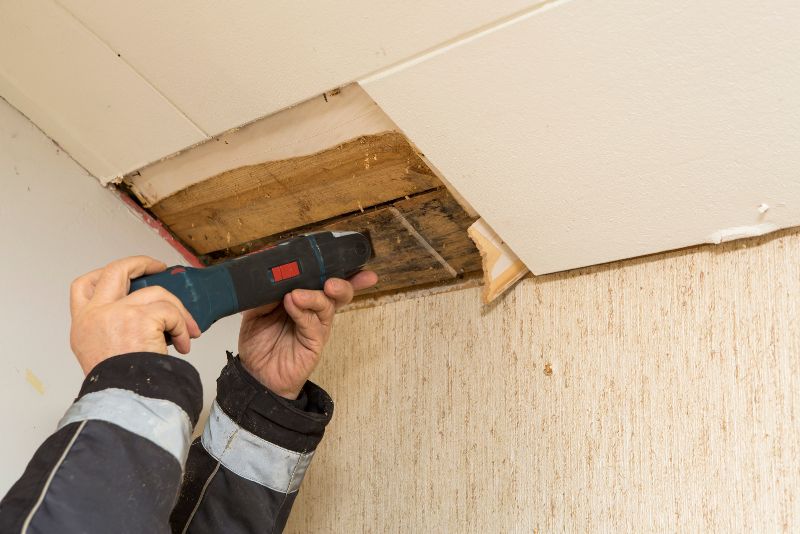
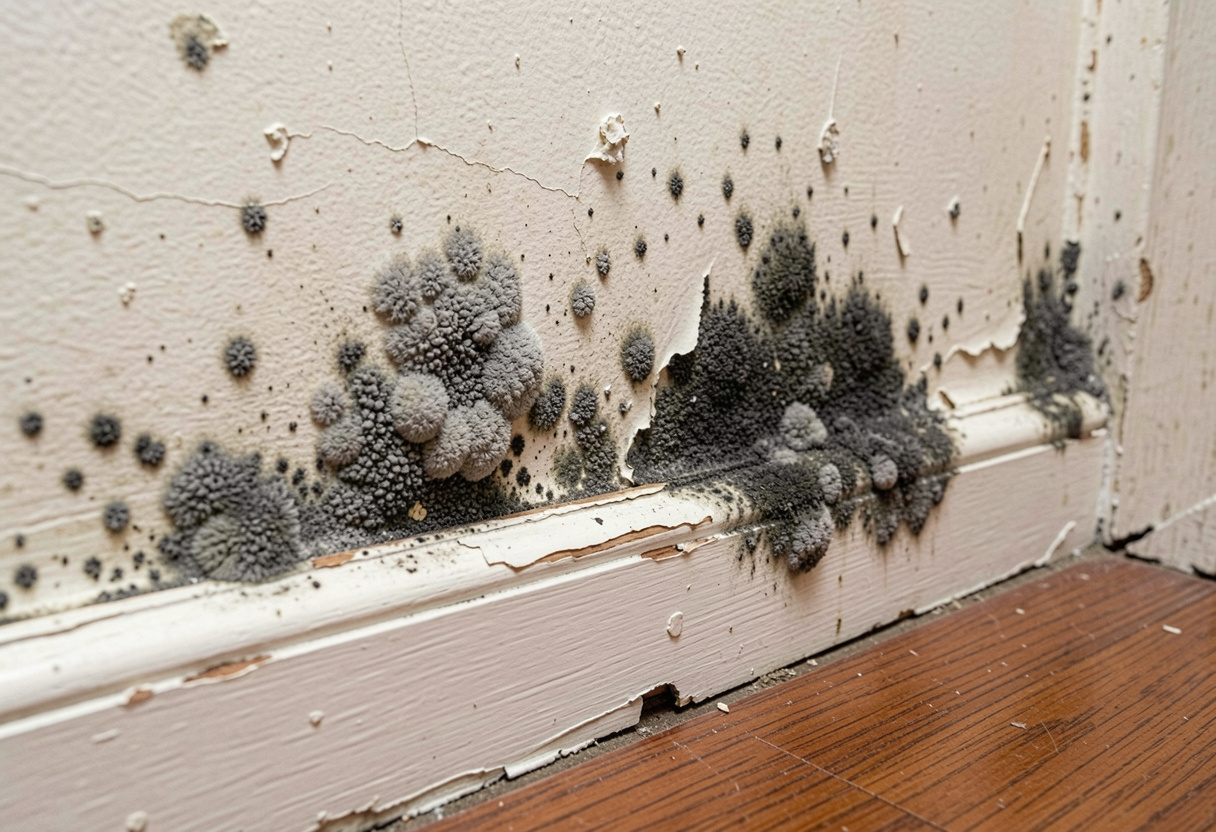
Professional ceiling mould removal involves much more than simply cleaning visible stains. The process begins with a detailed assessment of the ceiling material, mould coverage, and moisture levels to identify whether leaks, condensation, or ventilation issues are contributing to the problem. The surrounding area is then protected to prevent mould particles and treatment products from affecting floors, furniture, and other surfaces below.
Specialist antifungal treatments are carefully applied to eliminate mould growth while protecting the ceiling finish. Once the mould has been neutralised, it is removed using controlled techniques suited to the specific ceiling surface. Where repainting is required, a mould-resistant primer or sealer is applied to help prevent mould from returning through fresh paint. Finally, any underlying moisture issues are identified and recommendations are provided to address the root cause, ensuring a longer-lasting solution rather than a temporary fix.
Book Your Free Ceiling Mould Assessment
We work to preserve your ceiling finish wherever possible — avoiding unnecessary repainting costs and treating the surface with the care it needs. After treatment, we’ll walk you through practical ventilation and moisture management steps that reduce the risk of recurrence.
If you’ve spotted mould on your ceiling — or you can smell something but can’t quite find it — get in touch for a free ceiling mould assessment across Newcastle and the Hunter. We’ll tell you exactly what you’re dealing with and what it takes to fix it properly.
FAQs About Ceiling Mould Removal in Newcastle
How do I know if the mould on my ceiling is dangerous?
Any visible mould growth on a ceiling should be taken seriously, but black or dark green patches in a bedroom or living area are the ones I’d want looked at quickly — especially if anyone in the house has asthma, allergies, or keeps waking up with a stuffy nose. Newcastle’s humidity means ceiling mould colonies can grow faster and spread further than you’d expect. If it’s bigger than your hand, don’t wait.
Can ceiling mould come back after professional treatment?
It can, but only if the moisture source feeding it hasn’t been fixed. Professional treatment removes the colony and inhibits regrowth, but if your bathroom exhaust fan is undersized, your roof took a hit in the last East Coast Low, or your ceiling has a cold spot from poor insulation, the conditions are still there. That’s why I always identify and flag the source as part of the job.
Is ceiling mould covered by home insurance in NSW?
It depends on the cause. If the mould is linked to sudden water damage — like a storm event or a burst pipe — there’s a reasonable chance your insurer will cover remediation as part of the claim. Gradual moisture buildup from poor ventilation is typically excluded. I’d recommend documenting the affected area with photos before any work begins and contacting your insurer early.
How long does ceiling mould treatment take?
For a standard bedroom or bathroom ceiling in a Newcastle home, most treatments are completed within a few hours. Larger affected areas, older plaster ceilings, or situations where containment needs to be more involved will take longer. I’ll give you a realistic timeframe during the assessment so there are no surprises on the day.
Do I need to leave the house during ceiling mould removal?
For smaller contained areas, it’s not always necessary — but I’d strongly recommend it for households with young children, elderly occupants, or anyone with a respiratory condition. During treatment, spores can be disturbed and antifungal products have odours that linger for a short period. In most Newcastle jobs, being out of the treated room for a few hours is enough.
Will ceiling mould treatment damage my paint or leave marks?
Not when it’s done properly. The whole point of using professional-grade products formulated for painted ceiling surfaces is that we’re treating the mould without stripping or bubbling the finish. Older ceilings in places like Cooks Hill or Merewether with original paint layers do need a bit more care, and occasionally a coat of mould-inhibiting primer is recommended afterwards — but walking away with the ceiling looking worse than when we arrived isn’t something that happens on our jobs.
