
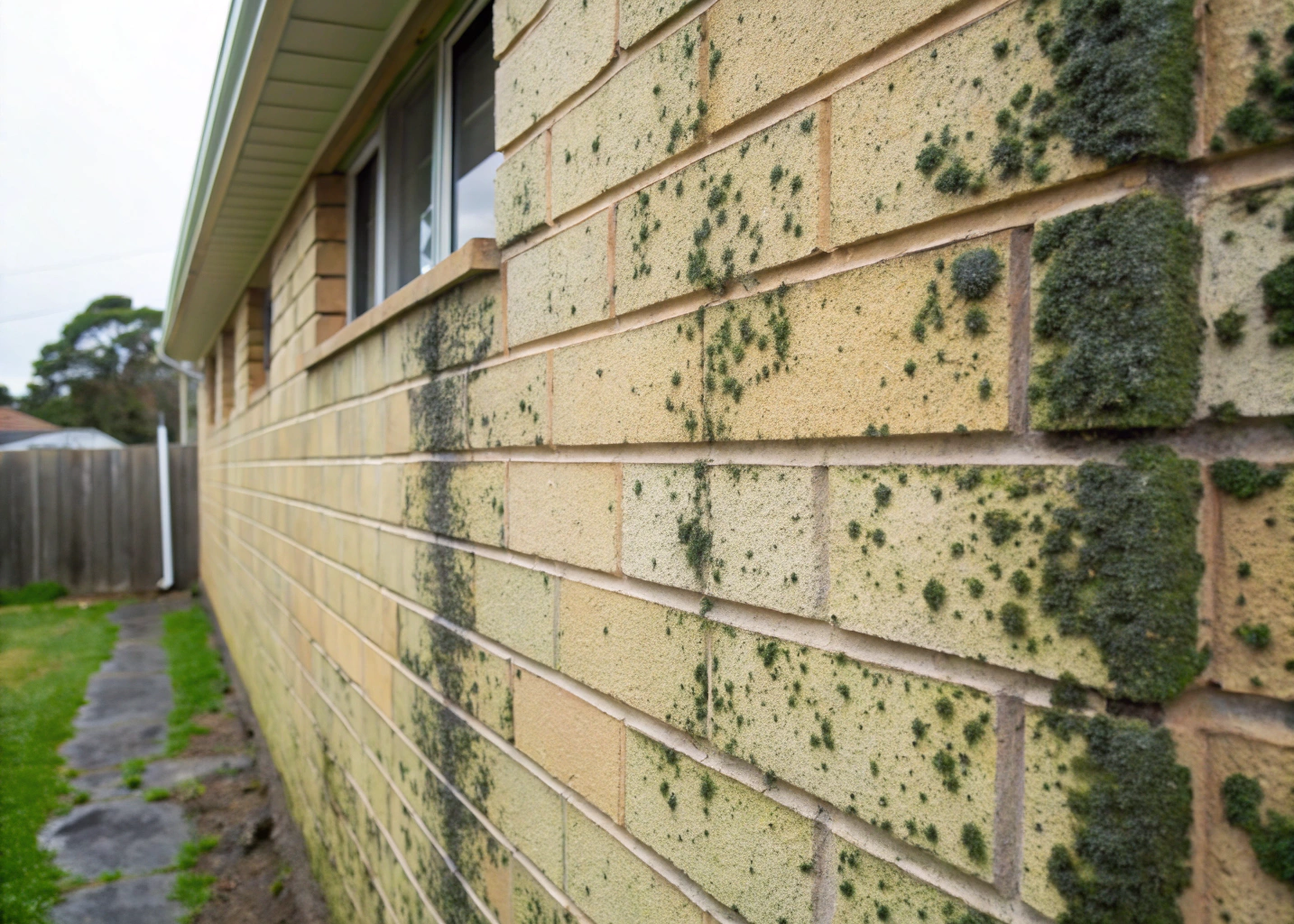
What Is the Best Way to Remove Mould from Exterior Walls?
The most effective method for removing mould from exterior walls is professional soft washing — low-pressure application of a commercial-grade biocidal treatment that kills the mould organism at the root, not just at the surface. Unlike household bleach or vinegar solutions, professional-grade treatments eliminate the biological colony embedded in render, masonry, and timber, preventing rapid regrowth.
The professional soft wash process:
- Assessment — identify surface type, mould species, and colonisation depth
- Surface preparation — protect landscaping and adjacent materials
- Biocidal application — low-pressure delivery of commercial antifungal solution
- Dwell time — solution penetrates and eliminates the mould root structure
- Rinse and inspection — surface cleared and treatment result confirmed
- Re-treatment scheduling — coastal Newcastle properties benefit from a planned maintenance cycle
In Newcastle’s coastal climate, exterior mould recolonises faster than in inland areas. Professional treatment delivers results that last — domestic products do not.

Why Exterior Mould Is a Property Maintenance Issue, Not Just a Cosmetic One
Most people notice exterior mould because it looks bad. A stained render, a blackened fence line, green creeping across the driveway — it’s the kind of thing that stands out from the street and knocks the first impression of a property flat. But the visible staining is only part of the problem.
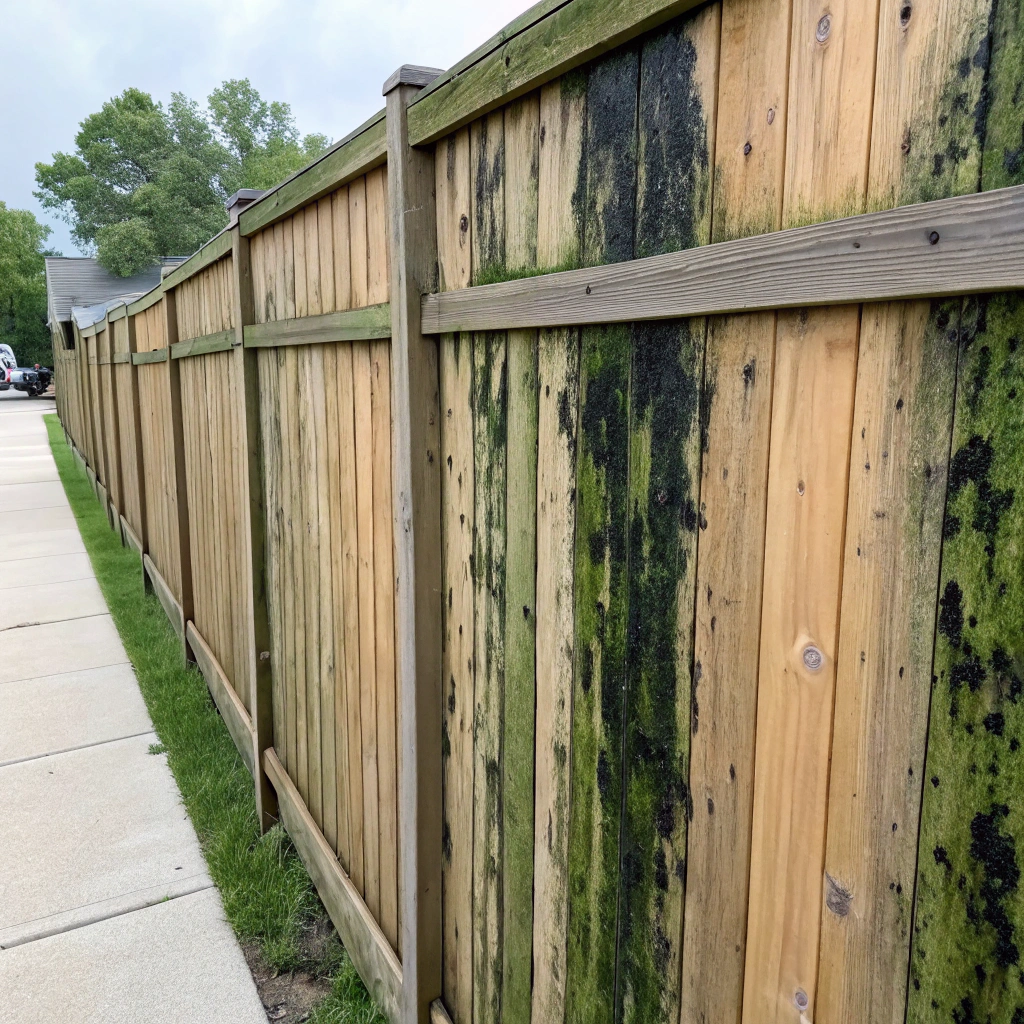
Exterior mould and lichen actively break down the surfaces they grow on. On rendered masonry, biological growth increases surface porosity, accelerating further contamination. On timber, mould works into the grain causing decay from the inside out. On driveways and pathways, algae creates a slip hazard that goes well beyond appearance.
This is an active process, not a static stain. Exterior mould caught and treated early costs significantly less to address than mould that’s had two or three seasons to take hold.
Exterior Surfaces We Treat Across Newcastle Properties
Why Exterior Mould Keeps Coming Back After DIY Treatment
If you’ve cleaned exterior mould yourself and watched it return within weeks, you haven’t failed — you’ve just been working with the wrong tool for the job.
Domestic sprays and bleach solutions remove what’s visible on the surface. What they don’t do is penetrate the root structure of the mould organism embedded in render, timber grain, and masonry. That biological material survives below the surface. Once moisture conditions return — and in Newcastle they almost never fully leave — the organism recolonises from the root up. The surface looks clean for a few weeks, then the staining is back. Often worse than before.
Newcastle’s coastal climate means regrowth conditions are present for most of the year. Professional-grade biocidal treatment penetrates the surface and eliminates the organism at the root — not just the visible growth above it. That’s the difference between a result that lasts and one that doesn’t.
Soft Washing vs Pressure Washing — Why the Method Matters
What Is Soft Washing?
Soft washing is low-pressure delivery of commercial-grade biocidal and antifungal treatment solutions directly to the affected surface. Rather than physically blasting visible growth away, it kills the mould organism at the root. It’s the industry-preferred method for render, masonry, timber, and roof surfaces — surfaces where high-pressure water causes real damage, including mortar joint erosion, paint lifting, and render loosening.
When Pressure Washing Is Appropriate
Pressure washing is the right tool for concrete driveways, hard paving, and pool surrounds where surface damage risk is low. On these surfaces, the physical removal of biological matter alongside chemical treatment is beneficial. We use pressure washing where it makes sense — it’s a legitimate method for the right surfaces.
Why Soft Washing Delivers Longer-Lasting Results
Soft washing eliminates the organism completely — it doesn’t just displace surface growth. That means the regrowth timeline is significantly extended compared to pressure washing alone or domestic product application. In a high-growth coastal environment like Newcastle, where mould conditions are present for most of the year, that distinction matters. Soft wash results last measurably longer.
Newcastle’s Coastal Climate and Exterior Mould Growth
Coastal Suburbs and Accelerated Facade Mould: Salt-laden humid air in Newcastle’s beachside suburbs — Merewether, Bar Beach, Newcastle Beach, and Stockton — creates near-ideal conditions for mould and algae colonisation on ocean-facing facades. Homeowners in these areas should expect faster recolonisation cycles and factor professional re-treatment into routine property maintenance.
Older Render and Newcastle’s Inner Suburb Housing Stock: Original sand and cement render across inner suburbs like Hamilton, Mayfield, Waratah, and New Lambton has become increasingly porous over decades of exposure. It absorbs moisture and biological contamination at a higher rate than modern render systems — a structural vulnerability that accelerates the problem.
Strata Buildings and the Newcastle CBD Precinct: Multi-storey strata buildings across the Newcastle CBD and Honeysuckle precinct deal with facade mould as a recurring property maintenance obligation. We work with strata managers and owners corporations across the precinct — covered in more detail below.


What to Expect From a Professional Exterior Mould Treatment
Initial Assessment and Surface Identification
Every treatment starts with an assessment. We confirm the mould species, colonisation depth, and the right treatment method for the surface before any work begins. Every surface is different — the assessment removes the guesswork and gives you a clear picture of what’s involved before we start.
The Treatment Process
Once the assessment is complete we prepare the surface, protect surrounding landscaping and adjacent materials, and apply the appropriate biocidal treatment. The solution is left to dwell — penetrating and eliminating the mould root structure — before the surface is rinsed and inspected. Most exterior treatments are completed in a single visit with no requirement for occupants to vacate.
After Treatment — What to Expect
Full biological die-off can take a few days to become fully visible — the surface may not look its best immediately after treatment. That’s normal. We’ll talk you through what to expect before we leave, including re-treatment scheduling for properties in high-growth environments.
Exterior Mould on Strata and Commercial Properties
Exterior mould isn’t just a residential problem. For strata owners corporations managing multi-storey buildings across the Newcastle CBD and Honeysuckle precinct, facade mould is a common property maintenance obligation that requires documentation, scheduled treatment, and a clear re-treatment program for high-exposure buildings. We work directly with strata managers and owners corporations to keep common property exteriors clean, compliant, and maintained on a schedule that suits the building.
For commercial property managers and business owners, exterior mould on building facades and car park structures affects professional presentation and the perception of anyone walking through the door. Biological staining on a commercial facade sends the wrong signal to tenants and customers alike.
We offer scheduled re-treatment programs for both strata and commercial clients across Newcastle and the Hunter Region. Ask us about ongoing maintenance arrangements when you get in touch.
Frequently Asked Questions About Exterior Mould Removal in Newcastle
If the mould has returned after DIY treatment, covers a large area, or is growing on render, roof tiles, or timber, professional treatment is the right call. Domestic products don’t eliminate the root structure — they buy time at best.
Most residential exterior treatments are completed in a single visit. The time on site depends on the number of surfaces and the extent of colonisation — we’ll give you a clear timeframe when we provide your quote.
Professional biocidal treatment eliminates the organism at the root, which significantly extends the regrowth timeline compared to domestic products. In high-growth coastal environments like Newcastle, we recommend a planned re-treatment cycle as part of routine property maintenance.
Yes. Before any treatment begins we protect surrounding landscaping and adjacent materials. Our treatment solutions are applied at low pressure and we take care to minimise any contact with garden beds, plants, and surrounding surfaces.
No. There’s no requirement for occupants to vacate during exterior treatment. We’ll confirm access requirements when we book the job and let you know what to expect on the day.
Newcastle’s coastal climate — salt air, high humidity, and older porous render — creates near-permanent regrowth conditions. Surface-level treatment manages the visible growth but doesn’t address the root structure. Professional treatment combined with a maintenance cycle is the most effective long-term approach.
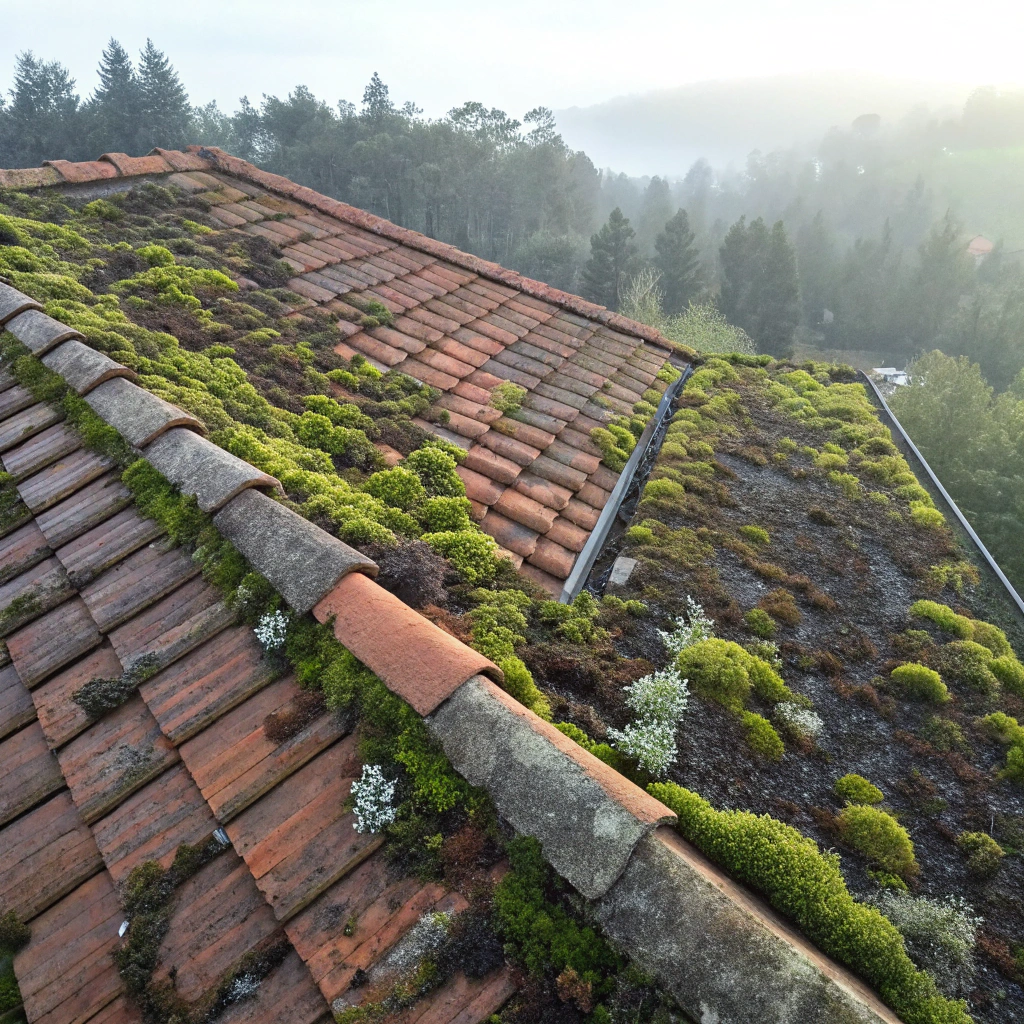
Yes. Moss and lichen growth on terracotta and concrete roof tiles is one of the most common exterior mould issues we treat across Newcastle. It’s both a presentation issue and a roof longevity issue — biological growth accelerates surface degradation and water pooling over time.
Get a Free Exterior Mould Assessment
Exterior mould on a Newcastle property isn’t something that resolves on its own. The longer it’s left, the deeper it embeds — and the more involved the treatment required to clear it.
We inspect your property, identify every affected surface, and provide a clear written quote with no obligation. Most exterior treatments are completed in a single visit with no disruption to your household.
Call Mould Removal Newcastle Experts today on 02 4072 2397.
Here’s how it works:
- Call us or submit your details online
- We assess the property and provide a written quote
- Treatment completed — most exterior jobs finished in a single visit
Serving Merewether, Bar Beach, Hamilton, Charlestown, Mayfield, and across the Newcastle region.
