
Types of Mould Testing We Use in Newcastle
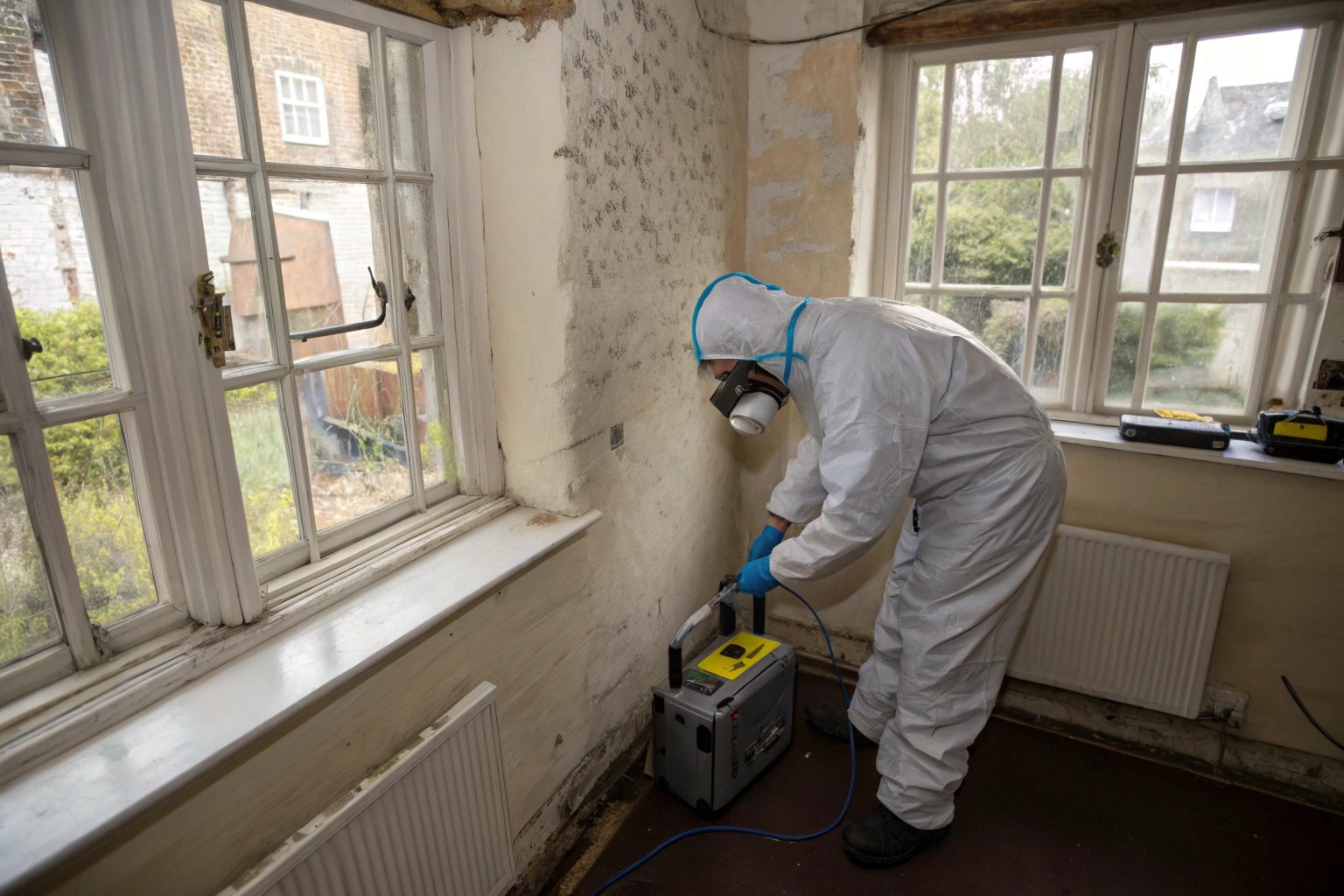
Different situations call for different sampling methods. Our testing process draws on four primary techniques depending on the property, the suspected contamination, and the purpose of the report.
Air Sampling
Air sampling measures airborne spore concentrations inside the property and compares them against an outdoor baseline reading. Elevated indoor spore counts — even without visible mould growth — indicate active contamination spreading through the living environment.
Surface Sampling
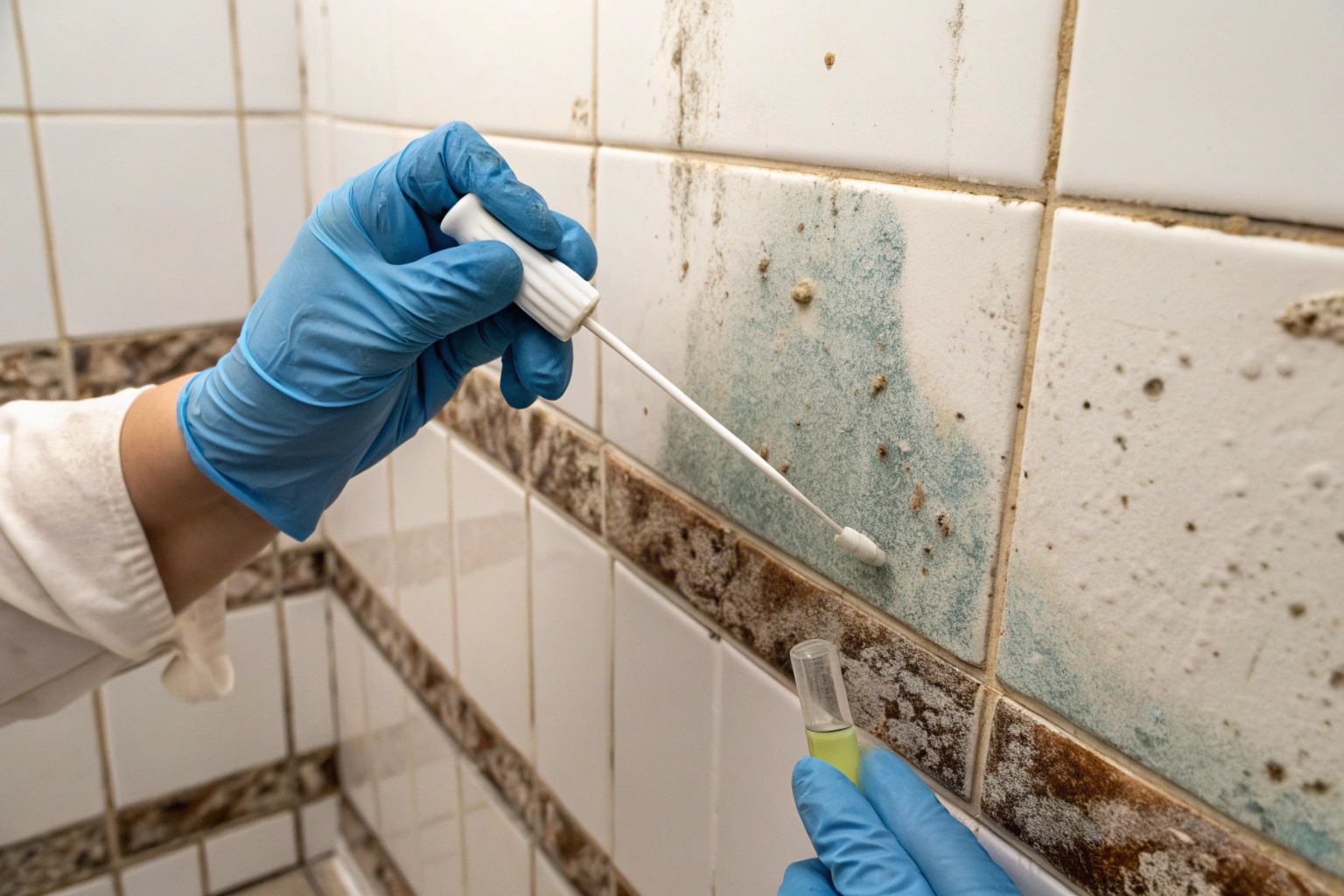
Swab and tape-lift surface sampling collects mould directly from affected materials including walls, ceilings, grout lines, and timber framing. This method identifies the specific species present at a known location and is commonly used when visible growth requires laboratory confirmation.
Bulk Sampling
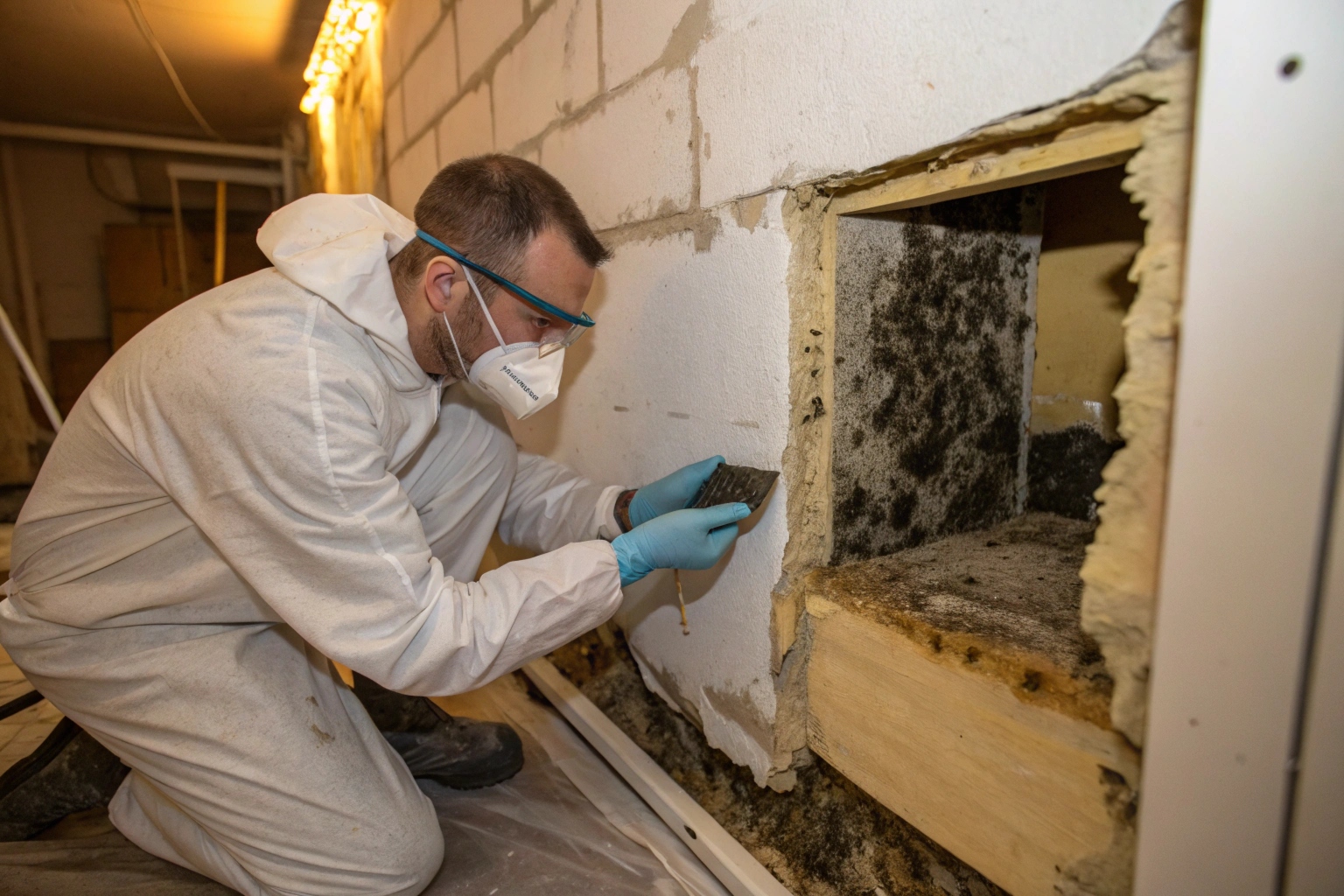
Where surface sampling isn’t sufficient, bulk sampling involves removing a small section of building material — plaster, timber, insulation — and sending it to the laboratory for full analysis. This is particularly relevant for Newcastle homes with wall cavities or subfloor spaces affected by long-term moisture ingress.
ERMI and Dust Sampling
ERMI and settled dust sampling provides a comprehensive picture of the historical spore load across a property. Rather than measuring a single point in time, dust sampling captures what has accumulated over weeks or months — making it one of the most thorough methods available for whole-property contamination assessment.

When You Need Mould Testing, Not Just a Visual Inspection
A visual inspection is the right starting point for most mould concerns. But there are specific situations where laboratory-confirmed testing is not optional — it’s the only way to get the answers you need.
Why Newcastle Properties Have a Higher Mould Testing Demand
Newcastle’s geography creates mould pressure that most inland Australian cities simply don’t experience at the same intensity. Sitting at the mouth of the Hunter River with direct Pacific Ocean exposure, the region carries year-round humidity that never fully dissipates — and older housing stock was never built to handle it.
Coastal and Riverine Humidity
Suburbs like Merewether, Bar Beach, Stockton, and Adamstown face constant salt-laden air that degrades window seals, weatherboard joints, and wall cavities — creating ongoing moisture ingress points that feed hidden mould growth long before it becomes visible.
Older Housing Stock
A significant proportion of Newcastle’s residential properties were built pre-1980 with no vapour barriers, minimal subfloor ventilation, and single-glazed windows that generate condensation throughout winter. Federation homes, Californian bungalows, and worker cottages across Hamilton, Mayfield, and Waratah are particularly vulnerable to chronic damp conditions that standard cleaning cannot resolve.
Post-Storm and Flood Contamination
East Coast Lows regularly push water into wall cavities, roof spaces, and subfloors across the Newcastle region. Mould establishes itself in concealed spaces within 24 to 48 hours of water contact — and in many cases homeowners aren’t aware contamination has taken hold until weeks later when health symptoms or odours emerge.
Mould testing gives Newcastle property owners the scientific confirmation needed to respond appropriately — not guessing at what’s present, but knowing.
Understanding What Your Mould Test Results Mean
Receiving a laboratory report for the first time can feel overwhelming. Our job doesn’t end when the results arrive — we walk you through every finding so the data translates into a clear picture of your property’s condition and what needs to happen next.
Spore Count Interpretation
Elevated indoor spore counts are assessed in context, not in isolation. A count that appears high in absolute terms may be within acceptable range depending on the outdoor baseline reading taken at the same time. What matters is the ratio between indoor and outdoor concentrations and whether specific high-risk species are contributing to the total count.
High-Risk Mould Species
Not all mould species carry the same health implications. Laboratory results will identify exactly which organisms are present, including:
• Stachybotrys chartarum — commonly known as black mould, associated with chronic respiratory issues and mycotoxin exposure
• Aspergillus — a widespread genus with several species linked to lung infections and allergic responses
• Cladosporium — one of the most common airborne moulds in Newcastle homes, a significant trigger for asthma and sinus conditions
From Results to Action
Once species and concentration data are confirmed, results feed directly into a recommended remediation plan — identifying affected areas, specifying treatment methods, and establishing a clearance benchmark for post-remediation testing. You won’t be left interpreting numbers without a defined next step.
Your Mould Testing Report — Turnaround, Documentation and Next Steps
Once laboratory analysis is complete, you receive a comprehensive written report that serves as the official record of your property’s mould contamination status. This documentation is produced to a standard that holds up in insurance negotiations, tenancy tribunal proceedings, and pre-purchase due diligence reviews.
What Your Report Includes
Every mould testing report we deliver contains:
• Species identification for every organism detected across all sample locations
• Spore concentration data with indoor-to-outdoor comparative analysis
• Contamination classification indicating severity levels at each sampled area
• Health risk commentary referenced against recognised Australian exposure guidelines
• Chain of custody documentation confirming sample integrity from collection through to laboratory analysis
• Recommended next steps based on findings — whether that’s targeted remediation, further investigation, or a clearance retest
Report Turnaround Times
Standard laboratory turnaround for most Newcastle mould testing appointments is 3 to 5 business days from sample submission. Expedited processing is available where results are urgently required for legal proceedings, settlement deadlines, or acute health situations.
Combining Testing With a Full Inspection
For properties where the source of contamination hasn’t been identified, combining mould testing with a full mould inspection delivers the most complete picture — moisture mapping, cause identification, species confirmation, and a remediation plan all produced from a single appointment.
Frequently Asked Questions About Mould Testing in Newcastle
What is the difference between mould testing and mould inspection?
A mould inspection identifies where mould is growing and what moisture conditions are causing it. Mould testing goes further — collecting physical samples for laboratory analysis to confirm species present, spore concentration levels, and health risk classifications. Both services complement each other but serve different purposes.
How long does a mould testing appointment take?
Most residential mould testing appointments in Newcastle take between 60 and 90 minutes depending on the size of the property and the number of sample locations required. Larger commercial properties or multi-room assessments may take longer.
Can mould testing confirm whether black mould is present?
Yes. Laboratory analysis is the only reliable method for confirming whether Stachybotrys chartarum — commonly known as black mould — is present in a property. Visual identification alone is not sufficient for species confirmation.
Will my insurance company accept the test results?
Reports produced from NATA-accredited laboratory analysis carry the evidentiary standard most insurers require for mould-related claims. We recommend confirming specific documentation requirements with your insurer before booking.
Do I need mould testing after remediation?
Post-remediation clearance testing is strongly recommended following any professional mould treatment. It provides documented confirmation that spore levels have returned to safe concentrations and the property is fit for re-occupancy.
How much does mould testing cost in Newcastle?
Testing costs vary depending on the number of samples required and the methods used. Contact us directly for a straightforward quote based on your specific property and situation.
Book Your Certified Mould Testing Appointment in Newcastle Today
When you need answers that go beyond what a visual inspection can provide, certified mould testing in Newcastle delivers the scientific confirmation required to make informed decisions about your property and the health of everyone inside it.
Whether you’re dealing with suspected toxic mould species, preparing documentation for an insurance claim, resolving a tenancy dispute, assessing a property before purchase, or confirming a remediation has been completed successfully — our testing process gives you results you can act on with confidence.
We service residential and commercial properties across Newcastle and the surrounding region including Merewether, Bar Beach, Hamilton, Charlestown, Mayfield, New Lambton, Wallsend, Stockton, Adamstown, Waratah, Wickham, and all surrounding suburbs.
Every appointment includes a pre-sampling consultation, calibrated sample collection following industry protocols, NATA-accredited laboratory analysis, and a formal written report delivered within 3 to 5 business days.
Don’t guess at what’s growing in your home — get the laboratory confirmation that gives you certainty.
Call our Newcastle team today to book a mould testing appointment or discuss combining testing with a full mould inspection for a complete property assessment. We’re ready to help you understand exactly what’s present, what it means, and what needs to happen next.
