
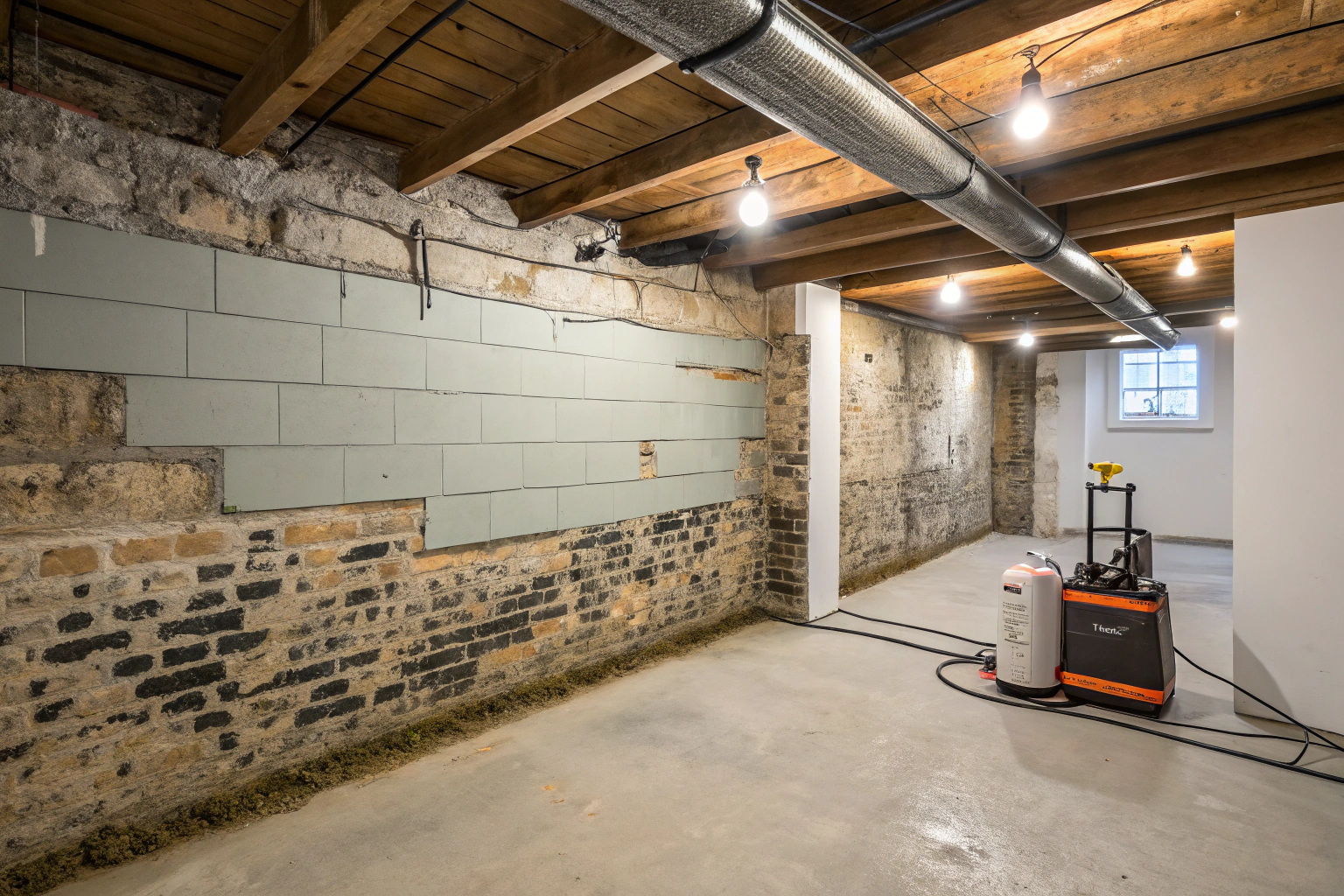
Why Basement Mould Is Different From Every Other Mould Problem
Basement mould removal sits in a category of its own. The below-ground conditions that define these spaces — hydrostatic groundwater pressure, near-zero natural light, negligible air circulation, and cold concrete surfaces that attract condensation — combine to create a mould environment that standard residential treatment methods are simply not designed for.
In a typical bathroom or bedroom, mould has one or two contributing factors: a leaking pipe, inadequate ventilation, or surface condensation. Address the source, treat the surface, improve airflow — the problem resolves. Basement mould doesn’t follow that pattern. Below-grade spaces often have multiple simultaneous moisture pathways operating at once, none of which are visible from the surface and several of which require waterproofing intervention rather than biological treatment alone.
The absence of UV exposure means mould faces no natural suppression. The lack of air movement means spore concentrations build without dispersal. Stored contents — cardboard, timber, fabric, archived paper — provide an almost unlimited food source for active colonies.
Resolving it properly means treating the biology and the building at the same time.

Newcastle’s geography creates moisture pressure that inland cities simply don’t experience at the same intensity. Positioned at the Hunter River mouth with direct Pacific Ocean exposure, the city operates under year-round humidity that never fully retreats, and below-ground spaces absorb the full weight of that pressure from every direction simultaneously.
Groundwater levels across low-lying Newcastle suburbs sit closer to the surface than most property owners realise. Areas around Throsby Creek, the harbour foreshore, Wickham, Carrington, and the inner west sit above water tables that respond directly to rainfall events, tidal movement, and seasonal saturation. For any below-grade structure in these locations, foundation walls and floor slabs are in near-constant contact with moisture-laden ground.
Above ground, coastal salt air accelerates the degradation of weatherproofing seals and masonry pointing, opening additional ingress pathways that compound the below-grade moisture load. Post-storm water infiltration following East Coast Lows introduces sudden high-volume moisture into wall cavities and subfloor spaces that can take weeks to fully dissipate.
Without active moisture management, below-ground spaces in Newcastle don’t dry out — they accumulate.
Newcastle’s Water Table and What It Means for Your Basement
Newcastle’s water table sits unusually high across a significant portion of the city’s residential and commercial footprint. The combination of Hunter River proximity, tidal influence along the foreshore, and the low-lying topography of suburbs including Carrington, Wickham, Tighes Hill, and Hamilton creates conditions where saturated ground is the baseline state — not the exception following heavy rain.
For property owners with below-grade spaces in these areas, the practical implication is that foundation walls and floor slabs are operating under continuous moisture pressure regardless of surface weather conditions. A dry week above ground does not translate to dry conditions below it.
Seasonal rainfall events and the East Coast Lows that regularly impact the Newcastle coast push the water table higher still, increasing hydrostatic pressure against foundations that may already be at capacity. For basement mould removal to deliver lasting results in these locations, waterproofing treatment is not a recommended add-on — it is a non-negotiable component of the remediation scope.
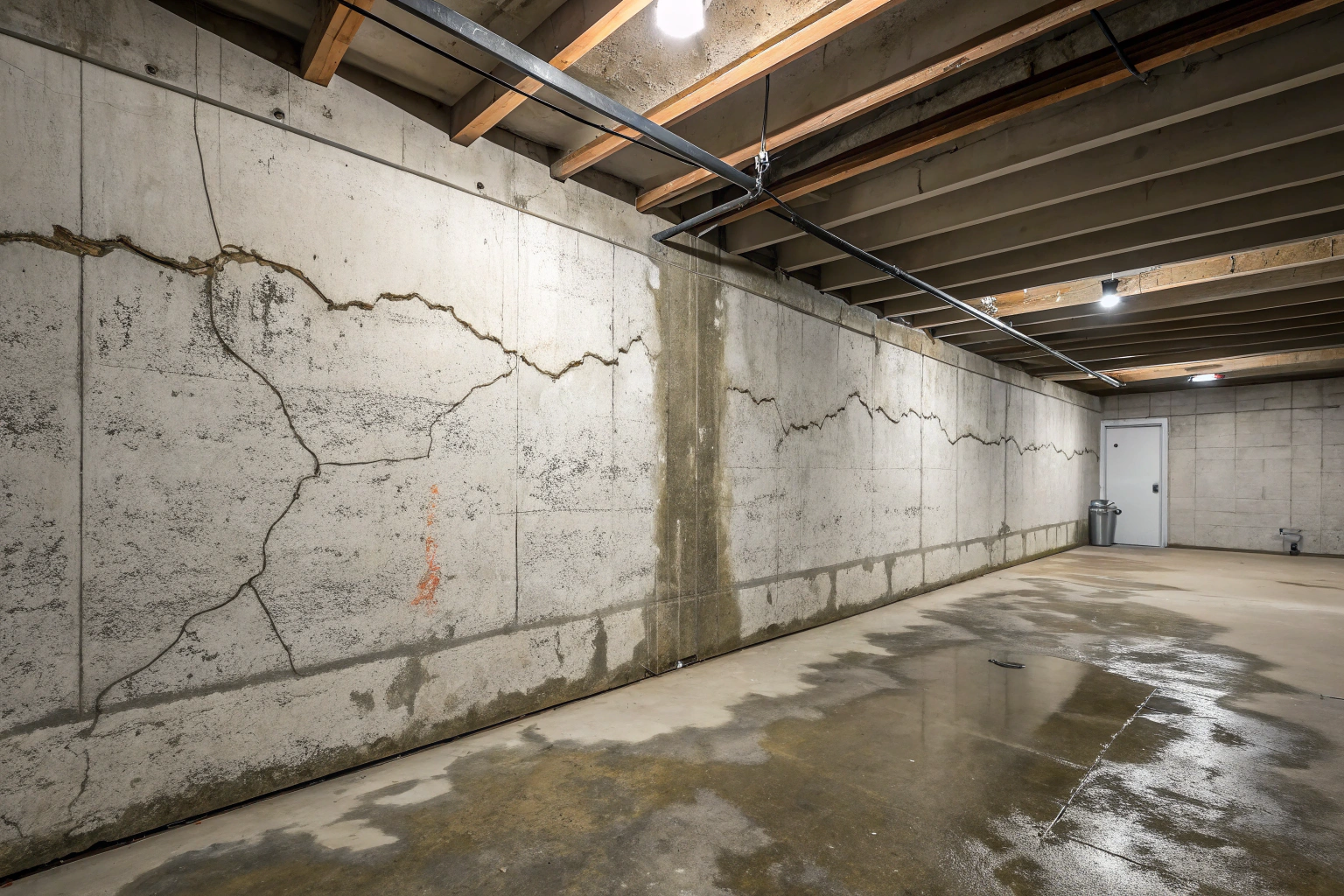
How Hydrostatic Pressure Forces Moisture Through Foundation Walls
Hydrostatic pressure is the force exerted by water-saturated soil against below-grade structures. As groundwater accumulates around a foundation following rainfall or tidal movement, it generates increasing lateral and vertical pressure against foundation walls and floor slabs. Concrete and masonry are not waterproof by nature — they are porous materials that absorb and transmit moisture under sustained pressure, even when no visible crack or gap is present.
The result in Newcastle’s below-grade spaces is moisture that appears to seep through solid walls with no obvious entry point. Common signs of active hydrostatic pressure include:
- Efflorescence — white mineral deposits left on masonry surfaces as water evaporates after pushing through the wall
- Damp patches appearing on interior wall faces after heavy rainfall or extended wet periods
- Rising damp at the wall-floor junction, where pressure is greatest at the base of the foundation
- Spalling concrete where freeze-thaw or salt crystallisation from repeated moisture cycling degrades the surface
- Persistent floor dampness even in dry weather, indicating groundwater pressure from below the slab
Without a waterproofing membrane or penetrating sealer applied to affected surfaces, biological mould treatment alone will not hold. Moisture will continue forcing through the substrate, reactivating treated surfaces and recolonising any organic material within the space. Addressing hydrostatic ingress is not optional preparation for basement mould remediation — it is the remediation.
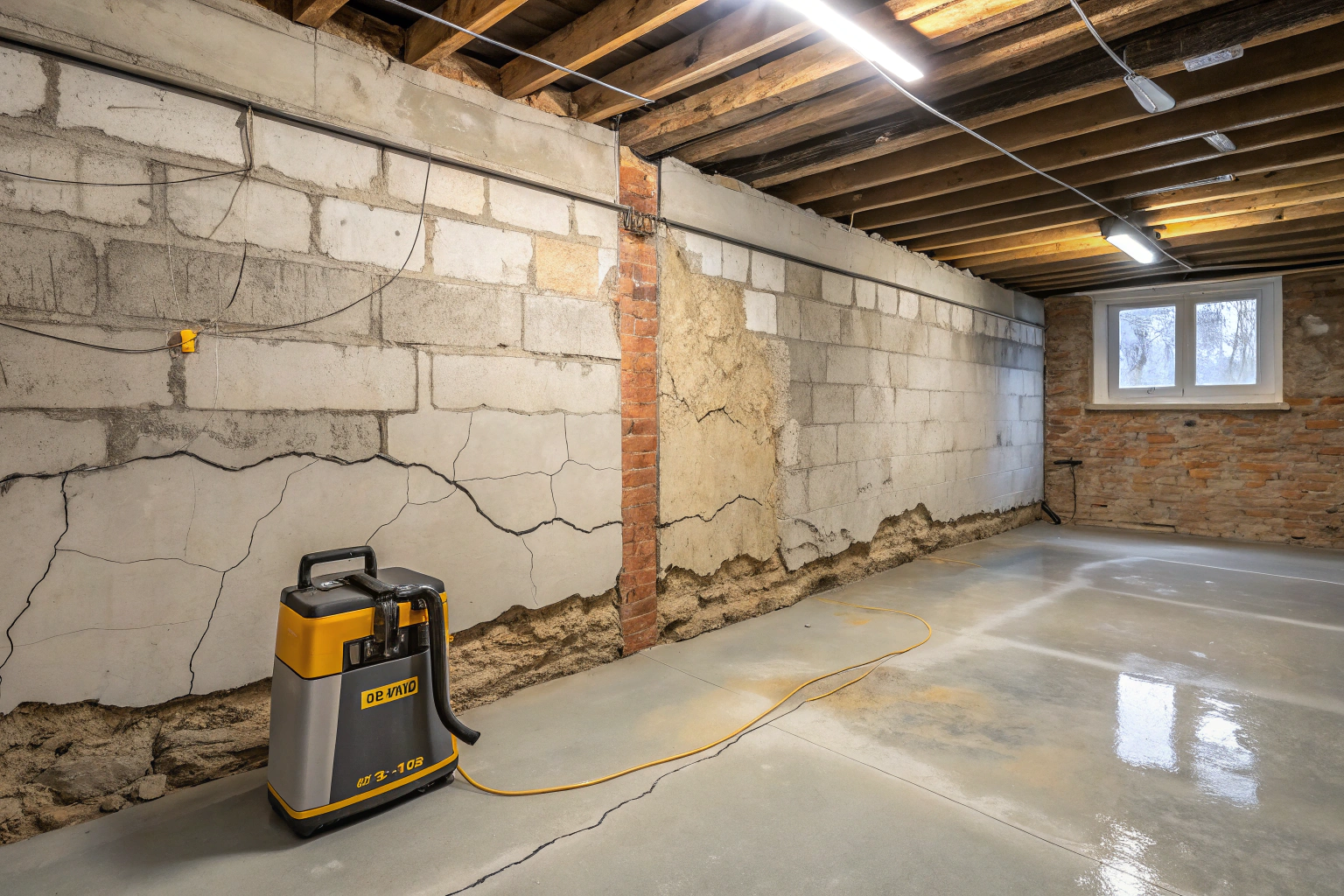
Waterproofing Assessment: Finding Every Active Water Ingress Point
Every basement mould remediation we undertake begins with a full waterproofing assessment before a single surface is treated. Applying biological mould treatment to a space with active water ingress produces temporary results at best — moisture reactivates treated surfaces within weeks, and mould re-establishes faster than the initial colonisation.
Our assessment process identifies every active and potential moisture ingress point across the below-grade envelope, including:
- Foundation wall faces — checking for hydrostatic seepage, failed render, and degraded masonry pointing
- Wall-floor junctions — the highest-pressure zone in any below-grade space
- Floor slab surface and joints — identifying rising damp and slab cracking
- Window wells and penetrations — common ingress points in semi-basement configurations
- Pipe and conduit penetrations — unsealed service entries that allow both moisture and outside air into the space
Findings are documented and used to scope the waterproofing intervention required alongside biological treatment, producing a remediation plan that addresses the source, not just the symptom.
Heritage Buildings and Sandstone: Specialist Treatment Without Damage
Newcastle’s inner city carries a significant concentration of Federation-era and Victorian commercial buildings — many along Hunter Street, the CBD precinct, and surrounding blocks — where original sandstone foundations, masonry walls, and below-grade cellars present a mould remediation challenge that standard treatment methods are not equipped to handle.
Sandstone is highly porous and reacts adversely to aggressive chemical treatments. Applying standard biocidal products at residential concentrations to original sandstone can cause surface spalling, salt mobilisation, and irreversible staining that damages irreplaceable building fabric. Heritage property owners face the additional obligation of treating mould effectively without compromising the material integrity that heritage listings exist to protect.
Our approach to heritage basement mould removal uses conservative, substrate-compatible treatment products tested for use on porous natural stone, combined with low-pressure application methods that penetrate without saturating. The goal is complete biological remediation of the affected substrate while leaving the building fabric intact for future generations.
Our Basement Mould Removal Process From Assessment to Clearance
| Initial Moisture & Waterproofing Assessment | Surface Treatment & Biological Remediation | Contents Removal & Safe Disposal |
|---|---|---|
| Every engagement begins with a full below-grade moisture assessment. We identify active water ingress points through foundation walls, floor slabs, wall-floor junctions, and service penetrations. Moisture readings are taken across all surfaces before any treatment begins, establishing a baseline that guides the entire remediation scope and waterproofing intervention requirements. | All mould-affected surfaces are treated using products specifically formulated for masonry, concrete, and timber substrates. Below-grade surfaces require higher-concentration applications and extended dwell times compared to standard residential treatment. Each affected surface is treated methodically, with particular attention to wall-floor junctions, corners, and any porous substrate where mould colonisation penetrates beyond the visible surface layer. | Mould-contaminated contents — cardboard, timber, fabric, archived paper, and stored materials — are assessed for salvageability. Non-recoverable items are removed and disposed of following safe handling protocols. Salvageable contents are treated where possible. Clearing contaminated material from the space before surface treatment prevents recontamination from airborne spores dislodged during the remediation process. |
Ventilation and Dehumidification After Basement Mould Remediation
Mechanical ventilation and dehumidification are not optional upgrades following basement mould remediation — they are the difference between a one-time treatment and a permanent resolution. Below-grade spaces have no meaningful natural airflow. Without active moisture management installed after biological treatment, humidity levels rebuild, condensation returns to cold concrete surfaces, and mould re-establishes within a single humid season.
The appropriate system for any given space depends on several factors:
- Space volume and ceiling height — determining extraction capacity and dehumidifier sizing
- Primary moisture source — condensation-driven spaces require different solutions from those with active groundwater ingress
- Usage pattern — a basement used for active storage requires different airflow management than a plant room or car park.
- Existing penetrations and ducting — influencing mechanical ventilation routing options
We specify and install systems matched to the specific moisture profile of each below-grade space rather than applying a generic solution. Ongoing humidity monitoring following installation confirms the system is maintaining safe levels before the remediation is formally closed out.



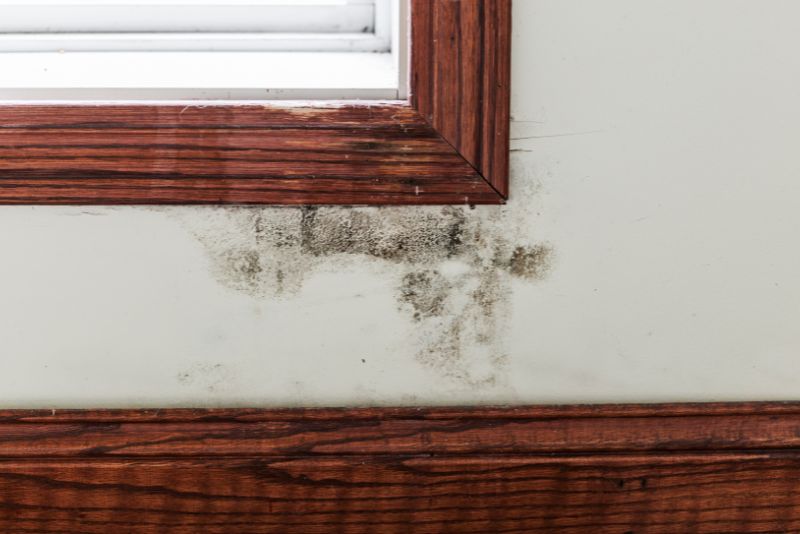
FAQ: Basement Mould Removal Newcastle
Basements are less common in Newcastle than in cooler-climate cities, but do exist across older inner-city homes, Federation-era commercial buildings, heritage properties, and strata complexes with below-grade car parks and plant rooms throughout the CBD and inner suburbs.
Surface cleaning removes visible mould but doesn’t address moisture forcing through foundation walls and floor slabs. Without waterproofing treatment alongside biological remediation, sustained hydrostatic pressure reactivates treated surfaces and mould re-establishes — often faster than the original colonisation.
Below-grade spaces require higher-concentration substrate-specific products, full waterproofing assessment, mechanical ventilation installation, and moisture verification. Standard residential mould treatment is designed for above-grade surfaces and doesn’t address the hydrostatic and condensation-driven moisture conditions that define basement environments.
We use conservative, substrate-compatible biocidal products tested for porous natural stone, applied at low pressure. This delivers complete biological remediation without causing spalling, salt mobilisation, or surface staining that aggressive standard treatments would produce on irreplaceable heritage building fabric.
Not always — but in the majority of Newcastle below-grade spaces, active moisture ingress through foundation walls or floor slabs is confirmed during assessment. Where hydrostatic pressure is present, waterproofing intervention is a non-negotiable component of achieving lasting results.
Scope and duration depend on space size, contamination extent, and whether waterproofing installation is required. A straightforward treatment can be completed in a single day. Spaces requiring waterproofing membrane application, contents removal, and ventilation installation typically span two to three days.
Book a Basement Mould Assessment in Newcastle Today
Basement mould removal in Newcastle requires specialist knowledge, substrate-appropriate treatment products, and a waterproofing assessment capability that standard mould cleaning services don’t carry. Below-grade spaces demand a different level of technical expertise — and the longer active moisture and biological growth are left unaddressed, the more deeply mould colonises structural surfaces, stored contents, and building fabric.
Whether you’re managing a residential basement, a heritage commercial property, a strata car park, or a semi-below-grade space in an older Newcastle home, our team has the specific experience and equipment to assess, treat, and clear it completely.
Contact us today to book a basement mould assessment across Newcastle, the Hunter Region, and surrounding areas. We identify the source, treat the biology, and address the moisture — permanently.
