
What Causes Leaking Roof Water Damage in Newcastle Properties
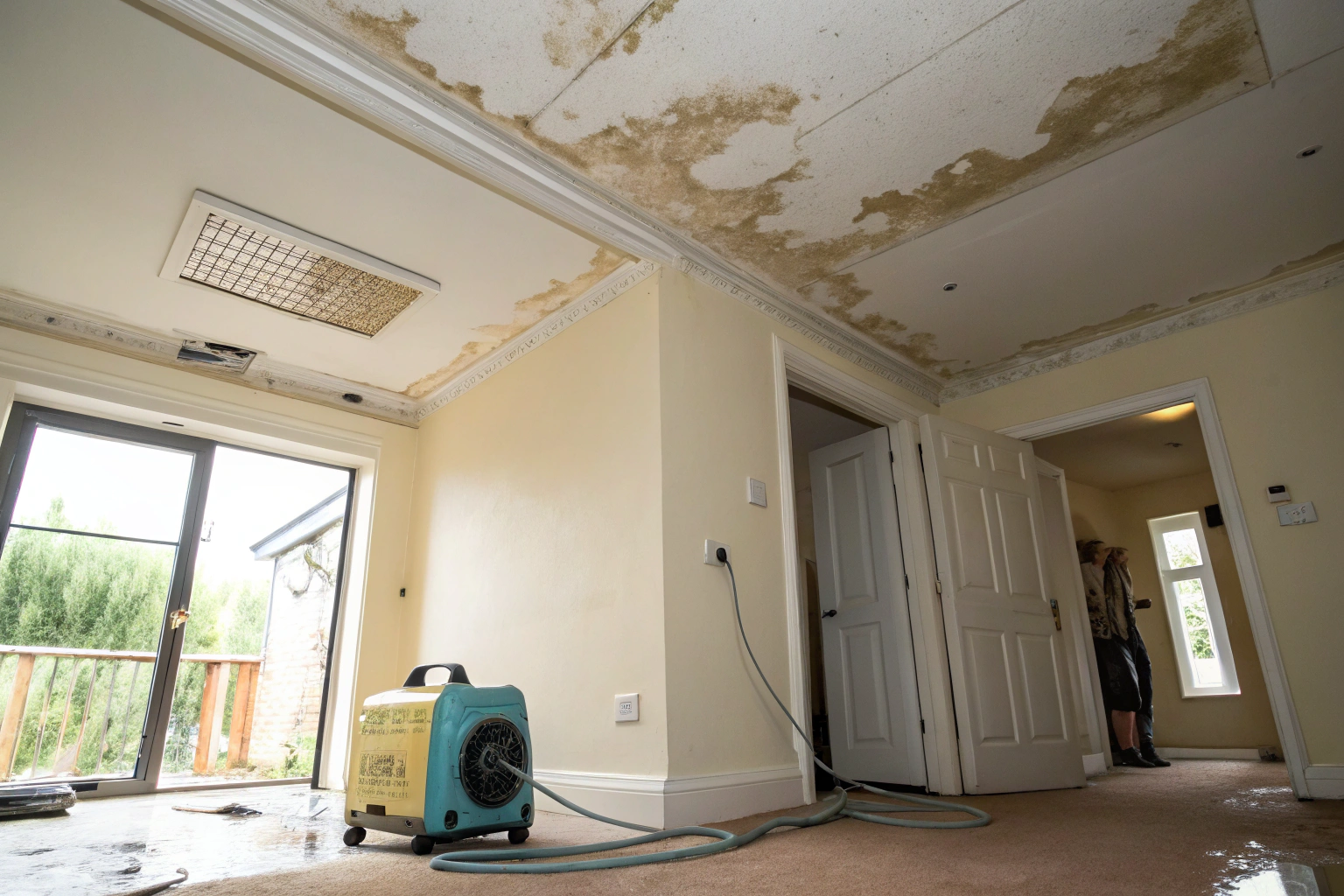
Roof leak water damage in Newcastle stems from a range of failure points, each producing a different pattern of moisture intrusion and a different scope of restoration work. The most common causes we attend across the region include:
- Storm-related roof breaches — displaced terracotta tiles, damaged corrugated iron sheeting, and failed flashing, allowing direct rainwater ingress during severe weather events
- Degraded valley flashing and failed pointing — chronic slow leaks from ageing terracotta tile roofs where original mortar and metal valley liners are at or beyond the end of service life
- Cracked, slipped, or broken tiles — allowing persistent low-volume ingress that saturates insulation and ceiling materials over weeks or months before becoming visible
- Skylight seal failures — water tracking down the skylight well and into the ceiling cavity along the frame
- Guttering overflow and backflow — blocked gutters causing water to pond against the fascia and track under the roof membrane into the ceiling space
Each cause produces concealed damage that extends well beyond the visible entry point.

Storm Damage vs Slow Leaks — Two Very Different Restoration Challenges
Roof leak water damage in Newcastle falls into two distinct categories, and the restoration approach differs significantly between them.
Acute storm damage occurs when a severe weather event — an East Coast Low, a hail event, or a significant wind storm — displaces or damages roof materials and allows direct, high-volume rainwater ingress into the ceiling cavity. The damage is rapid and often extensive. Ceiling plasterboard can become fully saturated within a single rain event, and structural timbers may absorb significant moisture volumes in a short period.
Slow chronic leaks are a different problem entirely. A hairline crack in a tile, a pinhole in aged valley flashing, or a deteriorating skylight seal allows small but persistent water ingress over weeks or months. The volume entering at any one time is low enough that it absorbs silently into insulation batts and ceiling materials without triggering visible signs. By the time a stain appears, the surrounding materials have been wet for a long time.
Both scenarios require professional moisture mapping before any restoration work begins.
Hidden Moisture in Insulation, Wall Cavities and Subfloor Spaces
Roof leak water damage does not stay in the ceiling. Once water enters the ceiling cavity, gravity and capillary action move it through every available pathway — and in Newcastle homes, those pathways extend well beyond the ceiling space itself. The materials most affected sit inside building cavities where no visual inspection can reach them.
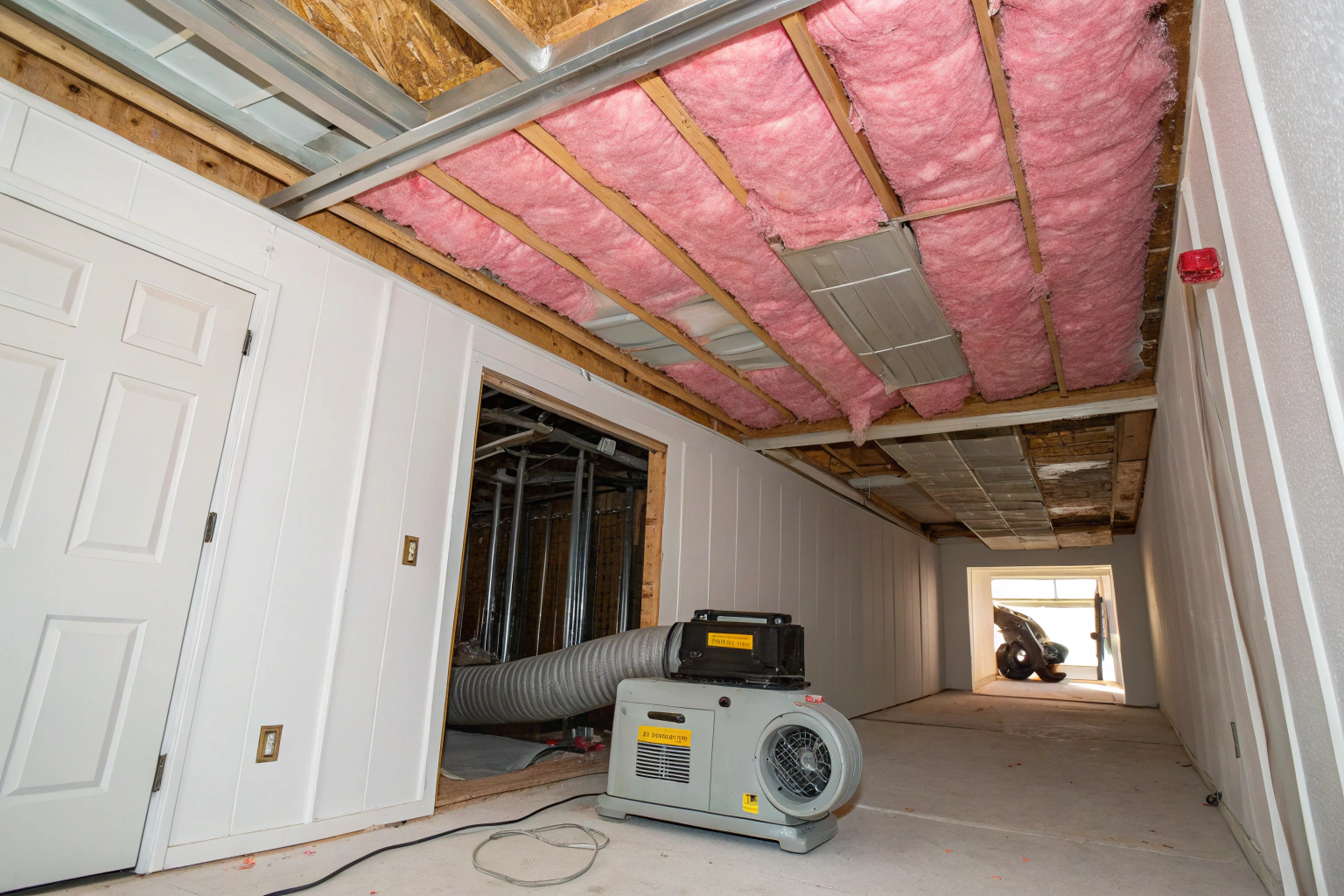
Insulation batts absorb and retain moisture long after the leak source has been repaired. Left in place, saturated batts cannot dry effectively in a confined ceiling cavity and will sustain active mould growth across the affected area. Wall cavities receive water tracking down from the ceiling space along internal wall framing — the plasterboard surface shows nothing, while the timber framing and noggins between them remain wet.
Subfloor spaces in single-storey Newcastle homes are a frequently overlooked endpoint. Water tracking down internal walls can reach the floor structure and continue damaging floor joists, bearers, and subfloor sheeting below floor level without any visible surface sign. Thermal imaging and calibrated moisture metering are the only reliable methods for tracing the full extent of hidden damage.
Why Ceiling Stains Underestimate the Real Extent of Water Damage
A ceiling stain is the point at which absorbed moisture has finally exceeded the capacity of the materials above it — not the point where the water damage began. By the time a stain becomes visible on your ceiling surface, the plasterboard at that location has already reached saturation. The water pathway that produced it has been active for significantly longer than the stain suggests.
Professional moisture mapping on Newcastle properties consistently identifies affected areas that extend well beyond the visible stain boundary. The hidden moisture pathway typically includes:
- Insulation batts directly above the stain that have absorbed and retained moisture across a wide area
- Ceiling plasterboard that reads dry on the surface but carries elevated moisture at the core
- Ceiling joists and structural timbers that have absorbed moisture along their length, away from the visible stain
- Internal wall cavities where water has tracked downward from the ceiling space without any surface indication
Treating only the visible stain leaves saturated materials inside your ceiling and wall structure where ambient temperatures and confined airflow will drive mould establishment within 24 to 48 hours of the initial water event.
Coordinating Roof Repair and Water Damage Restoration Together
Roof repair and water damage restoration are two separate scopes of work — but they need to run in close coordination to avoid compounding the damage already present in your property. Beginning the drying process while the roof breach remains open exposes drying equipment and partially restored materials to ongoing ingress during subsequent rain events, extending the restoration timeline and potentially increasing the overall damage scope.
Roof repair itself falls outside our restoration service. What we provide is clear communication of the breach location and nature based on our moisture mapping findings — information that gives your roofing contractor a precise starting point rather than a broad search across the entire roof surface.
We schedule drying equipment placement to begin once the roof is confirmed weathertight, or where urgency requires it, we can begin cavity preparation and material removal while roof repair is actively underway. Progress is monitored daily, and drying timelines are adjusted to reflect actual site conditions throughout the restoration period.
Returning Your Property to Pre-Loss Condition After a Roof Leak
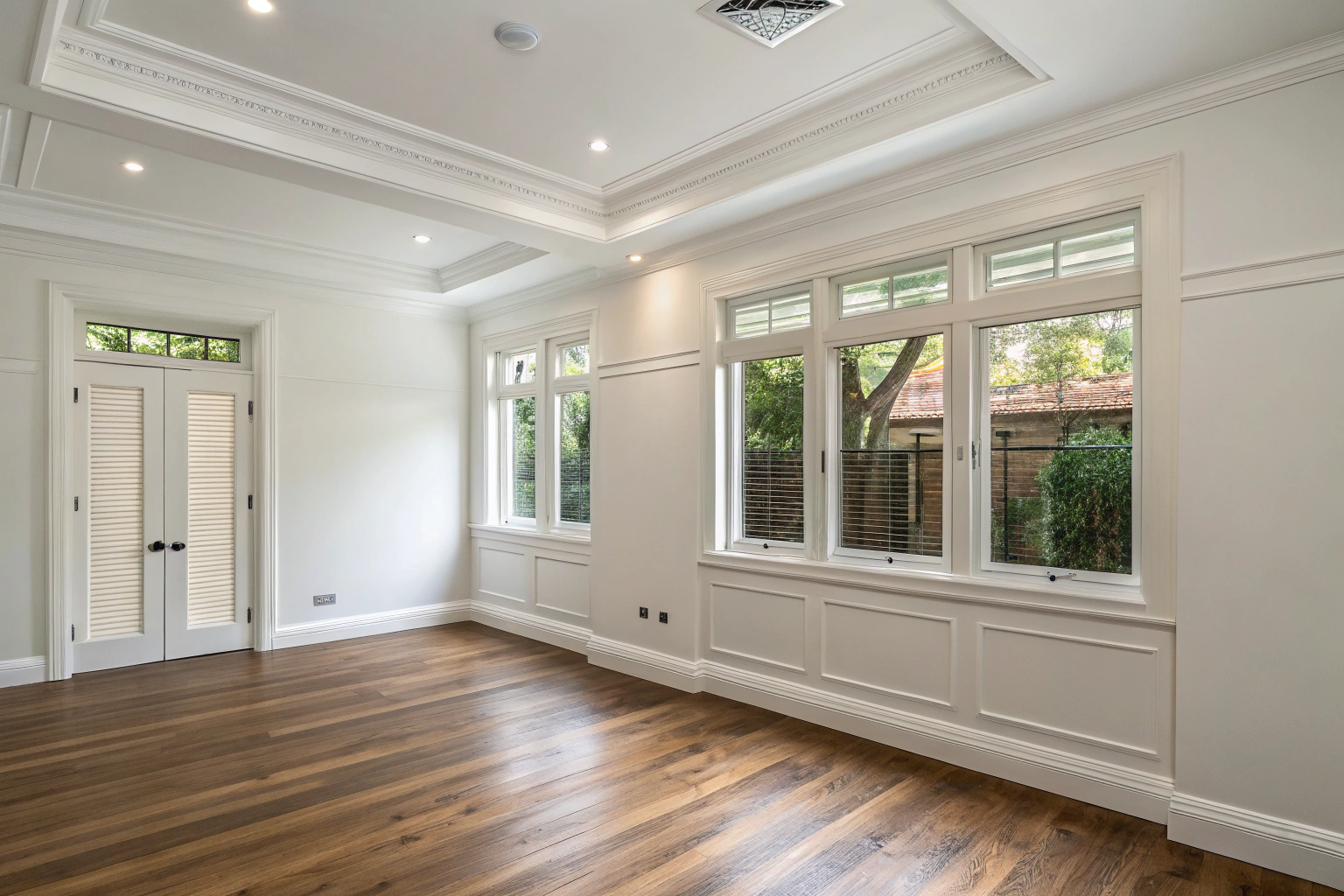
Pre-loss condition means the property is restored to the structural and material state it was in before the water damage occurred — not simply dried out and left for the homeowner to manage the rest. For leaking roof water damage in Newcastle, the scope covers every material affected by the water pathway, not only the materials that were visibly wet at the time of assessment.
Our restoration process works through the full damage pathway systematically. Saturated insulation is removed and replaced with new batts matching the existing specification. Ceiling plasterboard that required removal during the drying phase is reinstated to a paint-ready finish. Timber framing that absorbed moisture during the leak period is confirmed dry and structurally sound before any lining reinstatement proceeds. Antimicrobial treatment records confirm all affected cavities were treated during the drying phase.
Every stage is documented against the initial moisture map, giving your insurer a clear line from the original damage assessment through to verified completion of the full restoration scope.
The Leaking Roof Water Damage Restoration Process Step by Step
| Step 1: Moisture Mapping and Documentation | Step 2: Material Removal and Drying | Step 3: Verification and Completion Report |
|---|---|---|
| Thermal imaging cameras and calibrated moisture meters trace the full water pathway from the roof entry point to the extent of affected materials. All moisture readings and thermal images are compiled into a formal assessment report for insurance lodgement, establishing the pre-restoration condition of every affected building cavity before physical work begins. | Saturated insulation batts are removed from the ceiling cavity before industrial air movers and dehumidifiers are positioned based on moisture map findings. Ceiling plasterboard is removed where moisture levels or structural integrity require it. Antimicrobial treatment is applied to all affected surfaces — ceiling cavity timbers, exposed wall framing, and subfloor structures — to prevent mould establishment during the drying period. | Daily moisture monitoring confirms drying equipment is performing across all affected locations. Once drying reaches completion, every previously affected location is re-metered to confirm structural materials have returned to safe levels. A formal restoration completion certificate and full drying log are provided for insurance purposes, recording pre- and post-restoration moisture readings across all affected areas. |
Antimicrobial Treatment and Mould Prevention During Drying
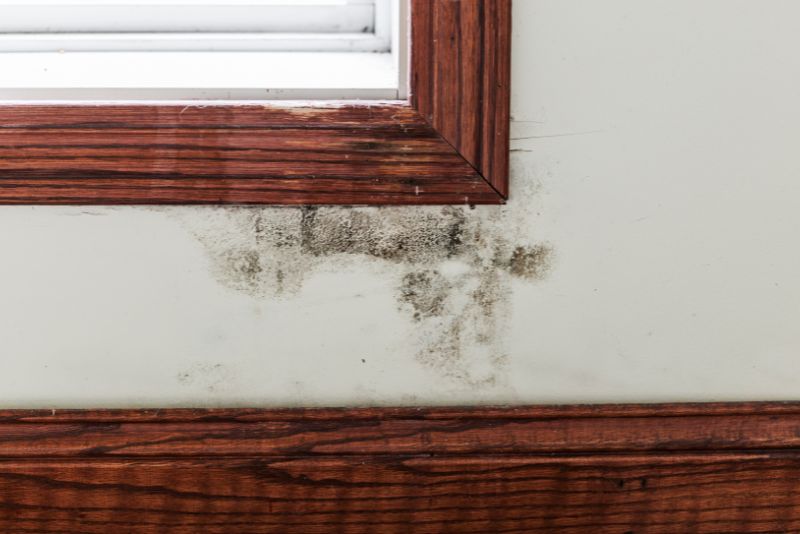
Mould does not wait for restoration to finish. In the confined, humid conditions of a saturated ceiling cavity or wall framing, mould spores can begin colonising timber and plasterboard surfaces within 24 to 48 hours of a water intrusion event. The drying period itself — while necessary — creates exactly the warm, moist environment that accelerates mould establishment if surfaces are left untreated.
Antimicrobial treatment is applied to all affected structural surfaces before drying equipment reaches full effect. This includes ceiling cavity timbers, exposed wall framing, noggins and bottom plates, and subfloor structures where moisture mapping has confirmed water penetration. Treatment targets the critical window between initial water intrusion and the point at which ambient drying conditions would otherwise allow spore colonisation to take hold.
For Newcastle properties where pre-existing mould is identified during the moisture mapping assessment — a common finding in older homes with a history of slow roof leaks — additional remediation treatment is applied before the drying phase begins to prevent cross-contamination across the affected area.



Frequently Asked Questions — Leaking Roof Water Damage Newcastle
Mould spores can begin colonising timber and plasterboard surfaces within 24 to 48 hours of a water intrusion event, particularly in confined ceiling cavities where humidity levels remain elevated and airflow is restricted during the period before restoration begins.
Most home insurance policies cover sudden and accidental water damage from roof leaks. Slow leak damage resulting from a maintenance failure may be assessed differently. Comprehensive moisture mapping documentation supports a complete and accurate claim regardless of the cause.
Roof repair and restoration are coordinated but separate scopes. Drying equipment placement is scheduled once the roof is confirmed weathertight. Where urgency requires it, cavity preparation and material removal can begin while roof repair is actively underway alongside restoration.
Moisture mapping on Newcastle properties consistently identifies affected areas extending significantly beyond the visible stain boundary, commonly including insulation batts, ceiling joists, adjacent wall cavities, and in single-storey homes, subfloor structures below the affected internal walls.
Saturated insulation batts cannot be dried effectively in a confined ceiling cavity and will sustain mould growth if left in place. Removal is standard practice for any insulation confirmed above safe moisture thresholds during the mapping assessment, with replacement matching the existing specification.
Book Your Leaking Roof Water Damage Assessment in Newcastle
Leaking roof water damage moves through your property faster than it becomes visible — and the materials most affected are the ones you cannot see from inside the room. The longer saturated insulation, ceiling plasterboard, and wall framing remain wet, the greater the scope of restoration required and the higher the risk of mould establishment inside your building cavities.
Our Newcastle restoration team is available for immediate assessment across the region. We attend with thermal imaging equipment and calibrated moisture meters, map the full extent of damage, and provide complete documentation for your insurance claim on the same visit.
Contact us today to book your assessment and get a clear picture of exactly what the water has affected inside your property.
