

What Does Mould Removal in Raymond Terrace Cover?
Newcastle Mould Removal provides complete mould assessment and remediation services across Raymond Terrace and the broader Port Stephens local government area. Services cover:
- Residential properties — weatherboard, brick veneer, and double-brick homes across all Raymond Terrace suburbs
- Light industrial and commercial premises — including properties in proximity to the Pacific Highway and Heatherbrae industrial corridor
- Flood-affected properties — post-inundation cavity drying, mould treatment, and clearance documentation
- Rental and investment properties — remediation reports suitable for landlord compliance and tenant resolution
- Pre-sale inspections — clearance certificates and documentation for Port Stephens Council area property transactions
Service area includes Raymond Terrace, Heatherbrae, Hinton, Swan Bay, and the surrounding Hunter River localities. Same-week assessments available. Free quotes provided.

Why Raymond Terrace Homes Develops Mould Faster Than Most
Raymond Terrace carries a combination of risk factors that few NSW suburbs can match. The convergence of the Hunter and Williams Rivers creates year-round humidity pressure that inland postcodes simply don’t experience, and the suburb’s established housing stock was built in an era when moisture management wasn’t a construction priority. The result is a local environment where mould doesn’t need much invitation.
Several conditions work together to accelerate growth in Raymond Terrace properties:
- River humidity and fog — overnight moisture saturation that penetrates unsealed wall cavities and timber framing
- Seasonal flooding — water entering subfloors and wall bases, often undetected for days or weeks
- Pre-1990s construction — no vapour barriers, inadequate subfloor ventilation, and original single-glazed windows generating constant condensation
- Industrial corridor proximity — properties near Heatherbrae and the Pacific Highway face additional airborne particulate load that compounds indoor air quality issues
- Established tree canopy — shaded elevations on older blocks reduce drying time on south-facing walls and roof spaces
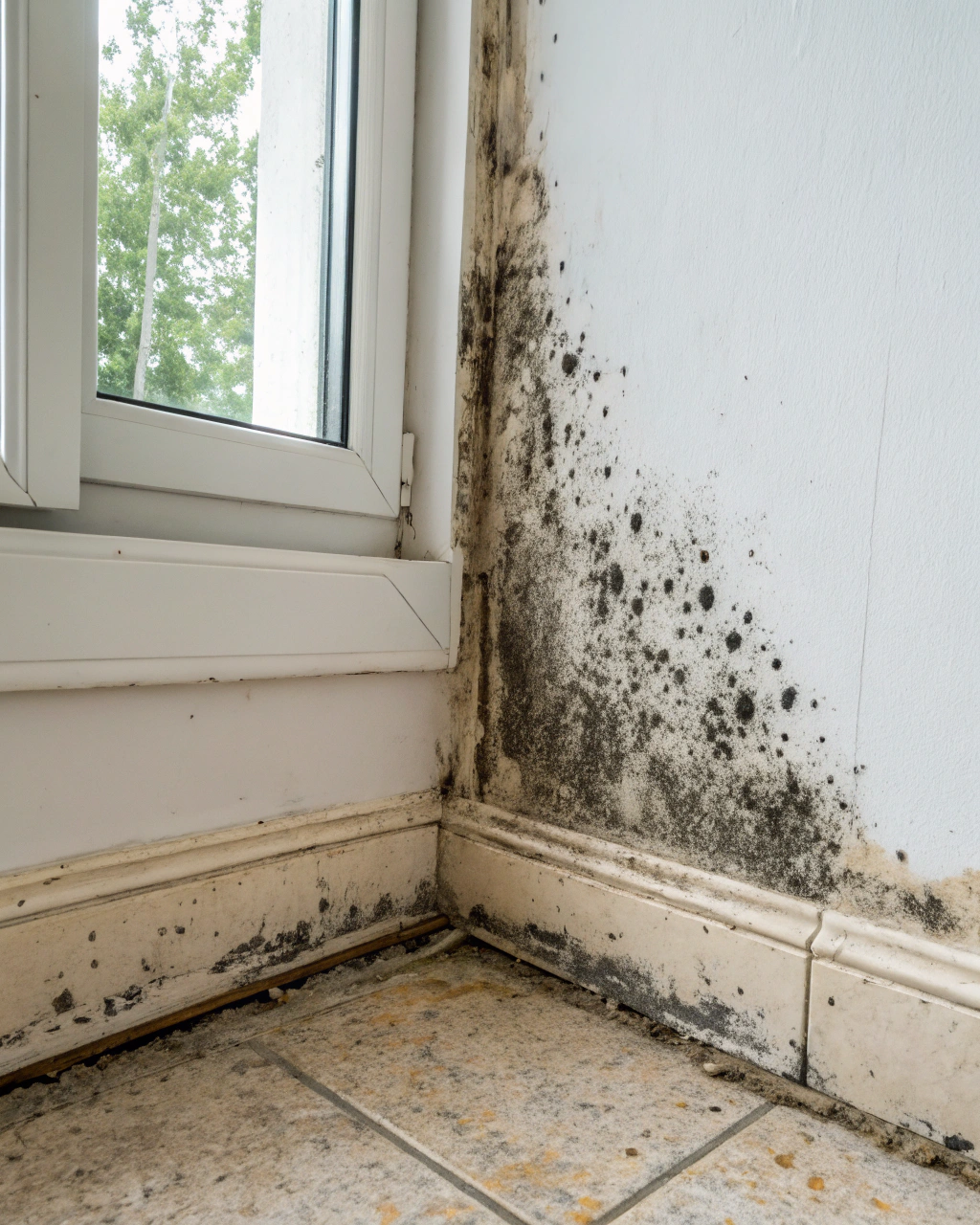
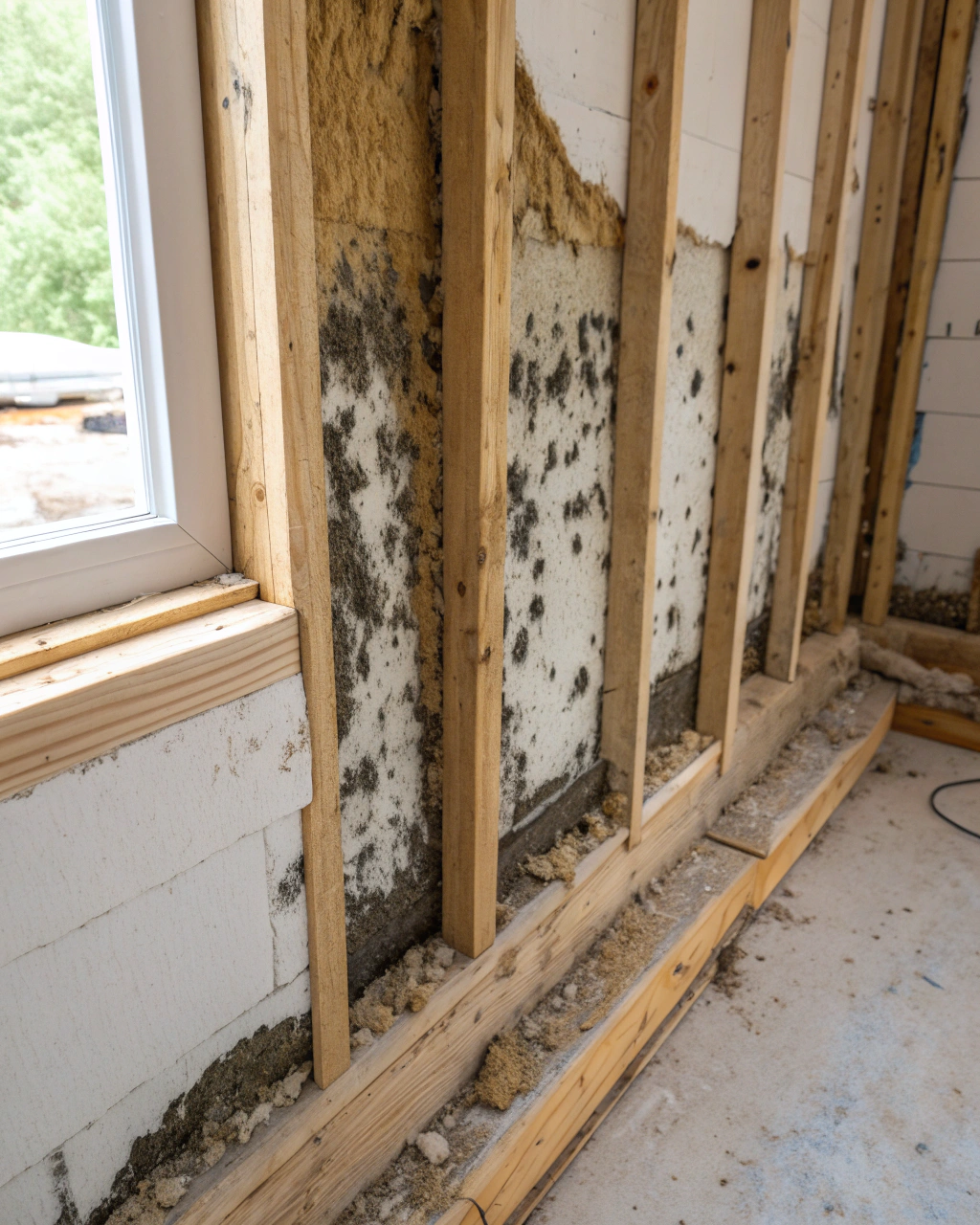
Wall Cavity and Subfloor Mould — The Problem You Can’t See
The mould visible on a bathroom ceiling or bedroom wall is rarely the full extent of the problem. In Raymond Terrace’s older housing stock, the more serious growth is typically concealed — inside wall cavities, beneath suspended timber floors, inside roof spaces, and behind original laundry fitouts that haven’t been touched since installation. By the time surface mould appears, the hidden colony has often been established for months.
Suspended timber subfloors are particularly common in pre-1980s homes, sitting directly above damp soil with limited airflow and no moisture barrier beneath them. Original internal wall linings — fibrous plaster and early gyprock — absorb moisture readily and hold spores deep within the substrate, well beyond the reach of any surface spray. Roof void condensation compounds the issue, where temperature differential between living spaces and uninsulated cavities generates persistent moisture accumulation across cooler months. Weathered wall flashings, slow plumbing leaks inside wall frames, and post-flood ingress complete a picture that only a thorough professional assessment can fully map.
Health Symptoms That Point to a Hidden Mould Problem
Mould exposure rarely announces itself clearly. In many Raymond Terrace households, the connection between a persistent health pattern and a hidden mould problem goes unrecognised for months — sometimes years. Symptoms are frequently attributed to seasonal allergies, winter colds, or dust, while the actual source continues growing inside a wall cavity or subfloor space.
The most commonly reported indicators in mould-affected homes include chronic nasal congestion and sneezing that intensifies indoors, recurring headaches with no clear dietary or stress trigger, and itchy or watering eyes that ease when the occupant spends time away from the property. Children and elderly residents tend to present symptoms first, often with persistent dry coughs or disrupted sleep patterns linked to airway irritation overnight. Adults with no prior history of asthma reporting new onset breathing difficulty or tightness in the chest should treat this as a serious signal.
The critical diagnostic indicator is symptom relief when away from home — on holiday, staying with family, or working extended hours offsite. If the household consistently feels better outside the property, a professional mould assessment is the logical next step.
Mould After Flooding — Why Acting Fast Protects Your Property
Raymond Terrace has a well-documented flooding history, and the aftermath of any inundation event creates ideal mould conditions almost immediately. Within 24 to 48 hours of water entering a subfloor, wall base, or living space, spore germination begins. Within 72 hours, active colonies are establishing inside wall cavities and beneath flooring substrates — long before the visible damage is dry enough to assess properly.
The properties most at risk following flood events are those with suspended timber subfloors, original wall linings, and any form of particleboard flooring, all of which absorb and retain moisture far longer than their surfaces suggest. Homeowners who wait until the interior looks dry before investigating have typically already allowed mould to reach a remediation-level problem rather than a treatment-level one.
Acting within the first week post-flooding allows for:
- Cavity drying before spore colonies fully establish
- Substrate assessment to determine what can be treated versus replaced
- Clearance documentation for insurance claims and future property transactions
Speed of response is the single biggest factor determining remediation cost and scope.
Pre-Sale Mould Removal — Protecting Your Property Value
A mould problem identified during a pre-sale building inspection is one of the most damaging findings a vendor can face in the Port Stephens property market. Buyers withdraw, prices are renegotiated, and settlement timelines collapse — outcomes that professional remediation completed well before listing will reliably prevent. Raymond Terrace’s established housing stock means pre-sale mould risk is a practical consideration for a significant proportion of vendors, not an edge case.
Professional remediation before listing delivers outcomes that DIY treatment cannot. A clearance certificate issued following professional remediation carries weight with buyers, their solicitors, and their building inspectors in a way that a freshly painted ceiling does not. Remediation documentation also satisfies vendor disclosure obligations and reduces the risk of post-settlement disputes arising from mould-related defects. For properties that have experienced any flood ingress, roof leaks, or persistent bathroom moisture over the years, a professional assessment before engaging an agent is a sound first step. The cost of remediation completed before listing is consistently lower than the price reduction negotiated after a building inspector flags the problem.
Frequently Asked Questions — Mould Removal Raymond Terrace
If mould covers an area larger than a dinner plate, has returned after previous cleaning, or is located inside a wall cavity or subfloor, professional remediation is required. Surface sprays cannot reach embedded spores.
DIY sprays treat visible surface growth but cannot penetrate the substrate where spore colonies are established. Without addressing the underlying moisture source — whether condensation, a slow leak, or subfloor dampness — regrowth is inevitable.
Yes. Properties that have experienced any level of inundation carry elevated mould risk, particularly in subfloors and wall bases. Spore germination begins within 24 to 48 hours of water entry, often before visible damage is apparent.
Certain mould species produce mycotoxins that affect respiratory health, particularly in children, elderly residents, and anyone with existing asthma or allergies. Professional identification and remediation is the appropriate response to any significant black mould presence.
Remediation cost depends on affected area size, substrate type, and access requirements. A professional assessment is necessary before accurate pricing can be provided. Newcastle Mould Removal offers free quotes across Raymond Terrace and the Port Stephens area.
