

Commercial Mould Remediation Tomago — What Facility Managers Need to Know
Tomago Industrial Estate mould remediation covers the full spectrum of commercial building types operating within the precinct and surrounding Port Stephens corridor:
- Warehouses and logistics facilities — high-volume air movement, loading dock moisture ingress, concrete slab condensation
- Manufacturing and production floors — process humidity, coolant vapour, and thermal cycling on metal structures
- Office areas within industrial buildings — HVAC cross-contamination from adjoining factory spaces
- Cold storage and refrigeration facilities — chronic condensation on wall and ceiling panels
- Tomago Aluminium precinct and surrounding estates — large-footprint remediation with minimal operational disruption
Service area: Tomago, Hexham, Beresfield, Thornton, Sandgate, and surrounding Hunter Valley industrial corridors.
Availability: 24/7 response for facilities where downtime directly impacts production schedules and compliance obligations.

Why Industrial Buildings Demand a Different Approach
Residential mould remediation is designed around a domestic scale — a bathroom ceiling, a bedroom wall, a laundry with poor ventilation. Commercial and industrial buildings in Tomago operate at an entirely different order of magnitude, and the contamination dynamics shift accordingly.
Building footprints spanning thousands of square metres mean a single moisture source can seed mould growth across multiple zones before any visible sign appears. Metal cladding and steel-frame construction — standard throughout the Tomago precinct — behaves differently to brick and plaster under thermal cycling, generating condensation at wall and ceiling interfaces during temperature shifts between operational hours and shutdown periods. Mechanical ventilation systems that service both factory floors and attached office areas become distribution networks when spore counts rise, carrying contamination into spaces physically separated from the source.
Workplace health and safety obligations add a compliance layer that has no residential equivalent. Remediation cannot simply proceed — it must be documented, risk-assessed, and scheduled in a manner that satisfies both WHS requirements and the operational continuity demands of a working facility.
Cold Storage and Refrigeration Specialist Treatment
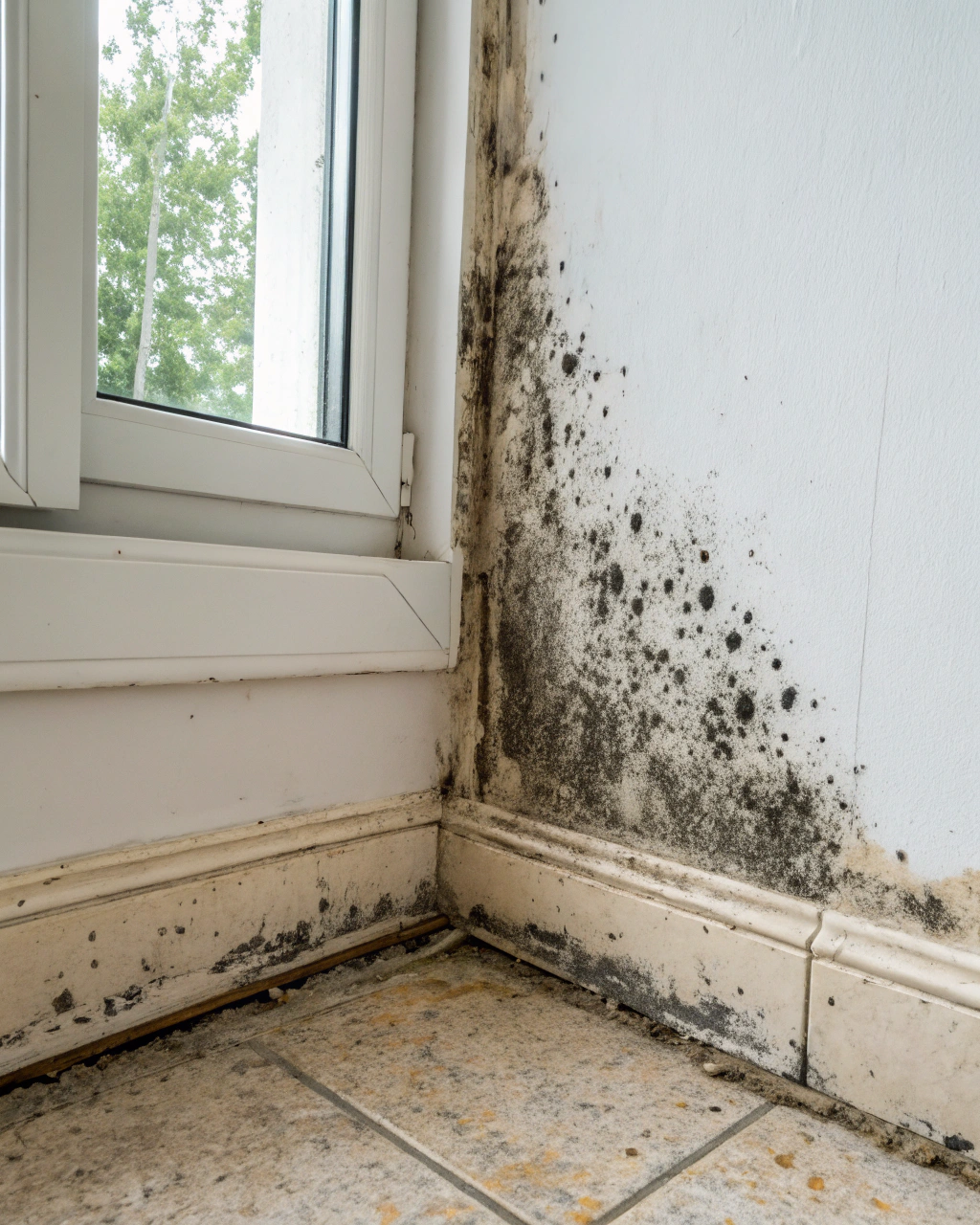
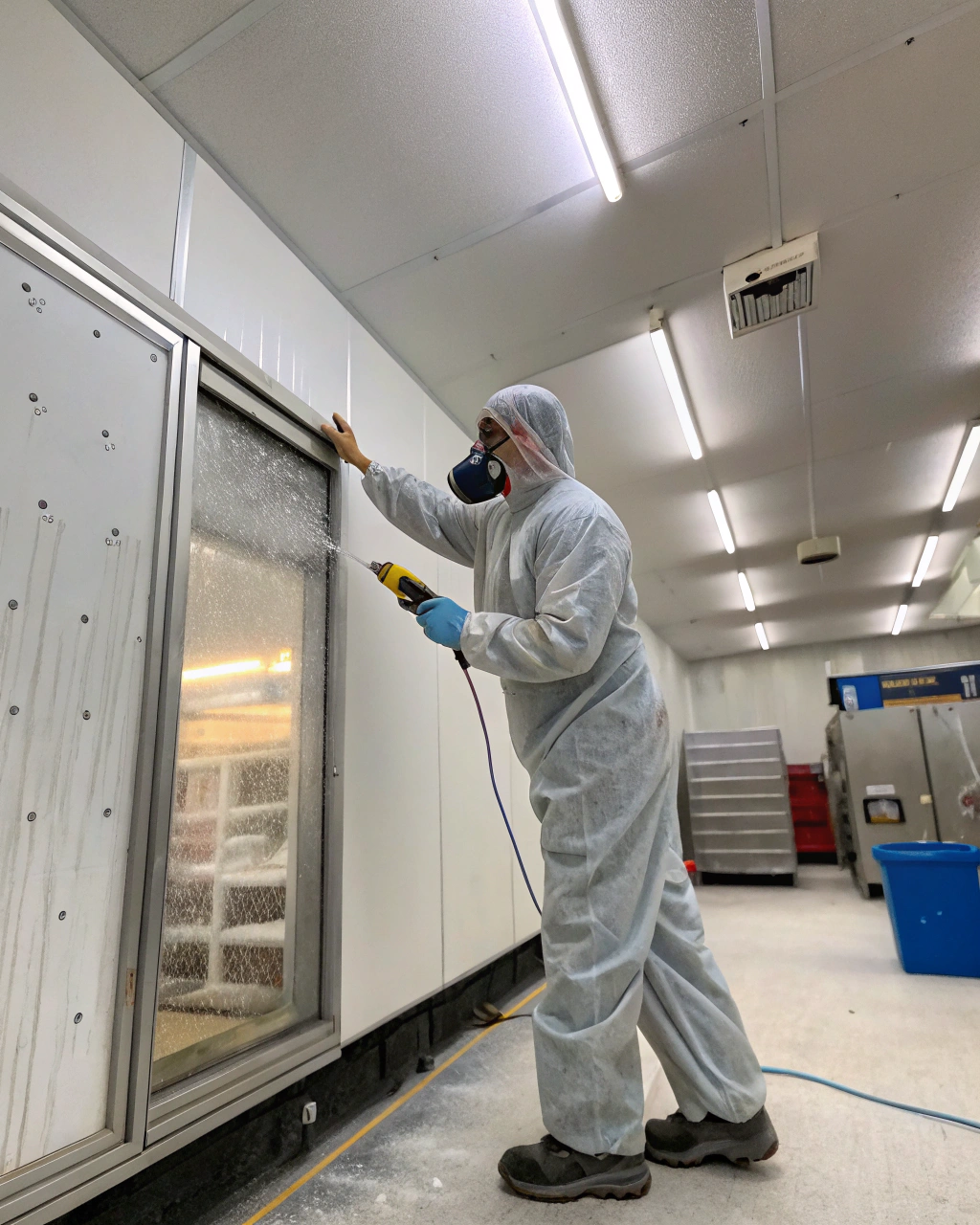
Cold storage and refrigeration environments present mould remediation challenges that fall outside standard commercial treatment protocols entirely. The temperature differential between refrigerated interiors and ambient external conditions creates persistent condensation at panel joints, door seals, floor perimeters, and any point where the thermal envelope is compromised. In Tomago’s industrial precinct, where coolrooms and cold storage facilities operate continuously through humid coastal conditions, this condensation load is sustained year-round rather than seasonal.
Standard biocidal treatments are ineffective in low-temperature environments — application temperatures, dwell times, and product chemistry all require adjustment for refrigerated spaces. Remediation inside active cold storage must also account for food safety regulations and contamination risk, requiring containment protocols that prevent cross-exposure between treatment areas and product storage zones.
Panel joint integrity is frequently the origin point for cold storage mould problems rather than surface condensation alone. Moisture tracking between insulated panels creates internal growth that is invisible until panel separation or odour identification triggers investigation. Effective treatment addresses both the surface contamination and the panel cavity where spore colonies establish.
For Tomago facilities managing refrigerated logistics, food processing, or temperature-sensitive manufacturing, specialist cold storage remediation is a compliance requirement as much as a maintenance one.
Preventative Programmes That Reduce Recurrence Long-Term
Remediation resolves the immediate contamination problem. It does not, by itself, address the underlying conditions that allowed mould to establish in the first place. For Tomago industrial facilities, recurrence prevention requires a structured programme that targets moisture sources, building envelope vulnerabilities, and the operational patterns that generate sustained humidity loads.
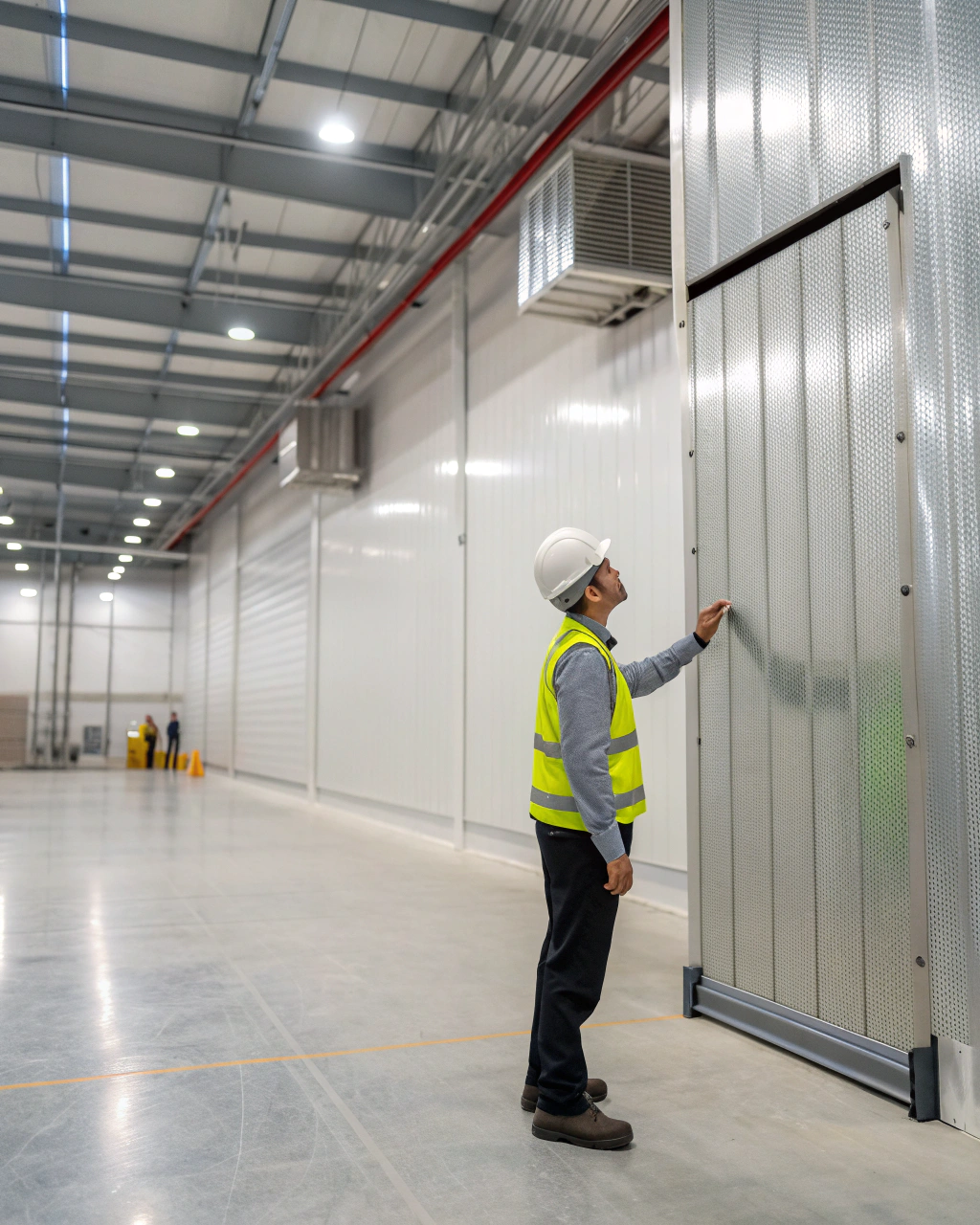
A preventative maintenance programme for a commercial site typically begins with a moisture mapping assessment — identifying the condensation points, ventilation deficiencies, and ingress pathways that drive contamination cycles. From this baseline, a scheduled inspection and monitoring protocol is established, with intervention thresholds defined before visible mould growth occurs.
HVAC servicing schedules, building seal integrity checks, and subfloor and roof void ventilation assessments form the core of ongoing prevention across large industrial buildings. In Tomago’s coastal-adjacent environment, salt air degradation of cladding and window seals requires more frequent envelope inspection than equivalent inland facilities.
For facility managers responsible for multi-tenancy industrial properties or high-value manufacturing environments, a documented prevention programme also demonstrates the duty of care obligations required under NSW workplace health and safety legislation.
Mould Inspection and Air Quality Testing for Commercial Sites
Identifying mould in a commercial or industrial building requires a methodology scaled to the environment. A visual inspection that might suffice in a domestic setting will miss contamination concealed inside ductwork, wall cavities, roof voids, and subfloor spaces across a large-footprint facility. Tomago’s industrial buildings compound this challenge — thermal bridging in metal structures causes condensation in areas that are neither visible nor routinely accessible during normal operations.
Commercial mould inspection at this scale involves systematic assessment of the full building envelope, including HVAC intake and distribution points, loading dock seals, coolroom panels, and any interface between temperature-controlled and ambient zones. Where contamination is suspected but not yet visible, air quality testing establishes spore counts and species identification — critical data for both WHS compliance documentation and remediation scoping.
For facility managers, this process produces a written inspection report detailing contamination locations, probable moisture sources, and recommended remediation pathways. That documentation forms the foundation for insurance engagement, contractor briefings, and regulatory compliance records required under NSW workplace health and safety frameworks.
Documentation and Clearance Certificates for Facility Managers
Commercial mould remediation in a workplace setting generates a documentation trail that matters well beyond the remediation itself. For facility managers operating within Tomago’s industrial precinct, written records of contamination, treatment methodology, and post-remediation clearance are not administrative formalities — they are material to insurance claims, WHS compliance obligations, lease negotiations, and due diligence requirements when a property changes hands or tenants.
Every commercial remediation project should conclude with a clearance certificate issued following independent post-treatment air quality testing. This confirms that spore counts have returned to acceptable levels and that the treated areas meet the standards required for safe reoccupation by workers. Without independent clearance testing, remediation completion is self-reported — a position that creates liability exposure for both building owners and facility managers.
Supporting documentation includes the initial inspection report, photographic evidence of contamination extent, the remediation methodology record, and any moisture source identification findings. This package provides the evidentiary foundation needed for insurance claim lodgement, regulatory enquiries, and the ongoing preventative maintenance programmes that reduce recurrence risk across the full facility lifecycle.
FAQ SECTION — Mould Removal Tomago
Industrial buildings involve larger footprints, metal construction, mechanical ventilation systems, and WHS compliance obligations. Tomago’s coastal proximity adds salt air degradation as an ongoing factor. Commercial remediation requires industrial-grade methodology, documented risk assessment, and scheduling built around operational continuity.
Treatment is scoped and scheduled around production hours, shift patterns, and critical operational zones. Containment protocols isolate affected areas without requiring full facility shutdown. After-hours and weekend scheduling is available for Tomago manufacturing and logistics operations where any downtime carries direct commercial cost.
Yes. Mechanical ventilation systems in commercial buildings distribute spores across multiple zones before visible growth appears. HVAC ducting, intake points, and distribution networks require inspection and treatment as part of any commercial remediation project to prevent recontamination of cleared areas.
Clearance certificates are issued following independent post-remediation air quality testing confirming spore counts have returned to acceptable levels. This documentation supports WHS compliance records, insurance claim lodgement, and provides written evidence of safe reoccupation for facility managers and building owners.
Thermal cycling in metal-framed structures generates condensation at wall and ceiling interfaces during temperature shifts between operational and shutdown periods. Combined with production process humidity and poor mechanical ventilation, these conditions create persistent moisture loads that drive mould establishment in industrial buildings.
